
In 2026, the explosive growth of AI training clusters, GPU computing infrastructure, distributed cloud platforms, financial disaster recovery systems, and real-time enterprise applications has pushed inter-data center bandwidth requirements to a level that traditional point-to-point optical expansion strategies cannot efficiently address. When each new service requires a dedicated wavelength, fiber resources are consumed faster than they can be provisioned. Rack space fills up. Power consumption climbs. Operational complexity multiplies. And the data center interconnect network that was designed to support today's traffic becomes a bottleneck for tomorrow's growth before the ink is dry on the capacity plan.
A muxponder solves this problem at its root. By aggregating multiple lower-rate client services — 10G, 25G, 100G, or higher — into a single high-capacity wavelength for optical transport, a muxponder dramatically improves fiber utilization, reduces wavelength consumption, and enables data centers to scale DCI bandwidth without the operational disruption and capital waste of rebuilding the optical layer from scratch. For enterprises and carriers evaluating an OTN muxponder for their next DCI upgrade, Sintai provides 100G, 200G, and 400G muxponder options designed to support scalable DCI, low-latency optical transport, flexible service aggregation, and smooth bandwidth upgrades across AI data centers, cloud platforms, financial networks, and enterprise private cloud interconnections.
This guide covers the complete picture for data center network planners: why muxponder technology has become essential for DCI bandwidth growth in 2026, how it delivers low-latency optical transport through efficient service aggregation, what components make up a complete DCI muxponder system, how to compare 200G and 400G options against transponder alternatives, and what deployment and maintenance practices protect DCI performance over the long term. Secondary keywords relevant to this decision — data center interconnect DCI muxponder, 200G coherent muxponder, low latency optical transport, and scalable OTN network — are addressed throughout.

The starting point for understanding why muxponder deployment has accelerated so dramatically in 2026 is a clear picture of what is actually happening to inter-data center traffic — and why the traditional approach to optical capacity expansion is no longer adequate.
AI training workloads require massive data movement between GPU clusters, storage systems, and inference nodes that may be distributed across multiple data center facilities. A single large-scale AI training job can generate hundreds of gigabits per second of inter-data center traffic — traffic that must be transported with low latency and high reliability to avoid becoming a bottleneck in the training pipeline. Cloud platform backbone expansion, distributed storage replication, financial disaster recovery, and real-time enterprise application synchronization add further layers of bandwidth demand on top of AI traffic.
The traditional response to DCI bandwidth growth — deploying additional point-to-point wavelengths for each new service — creates a set of operational and economic problems that compound as traffic volumes increase. Each new wavelength consumes fiber capacity, rack space, and power. The number of optical interfaces that must be managed grows with each addition. And when the fiber plant between data centers reaches capacity, the cost of deploying new fiber — or leasing additional dark fiber — can be prohibitive.
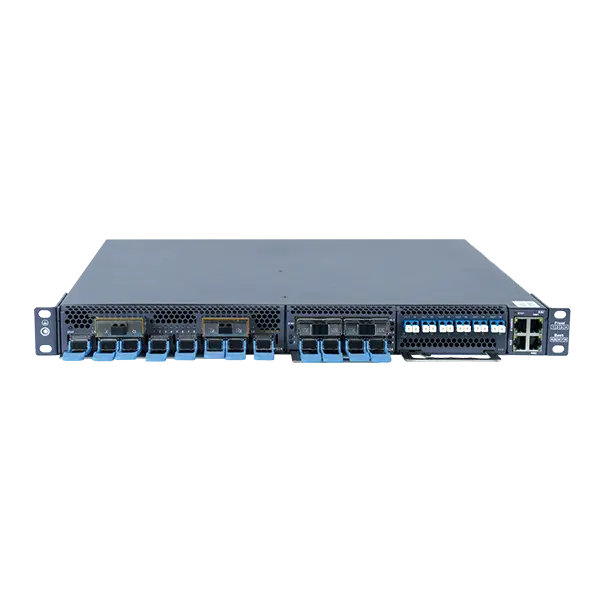
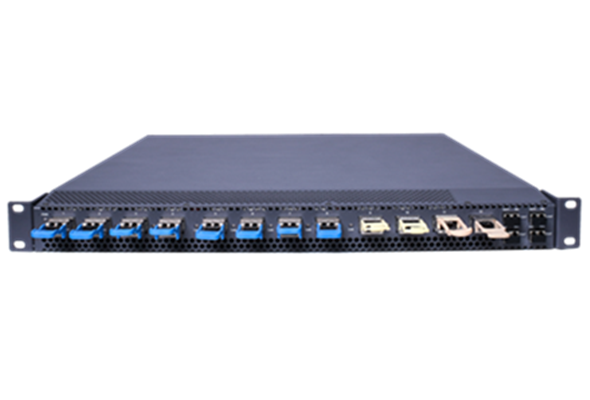
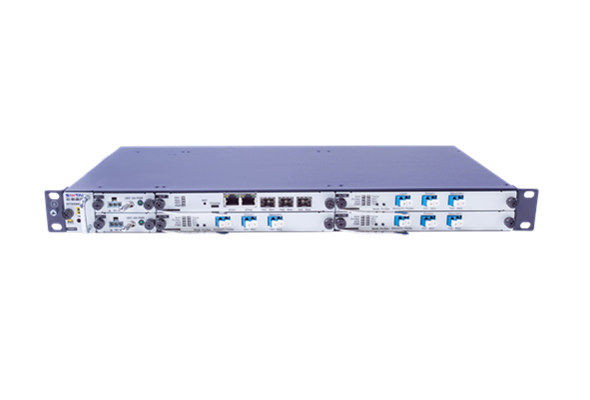
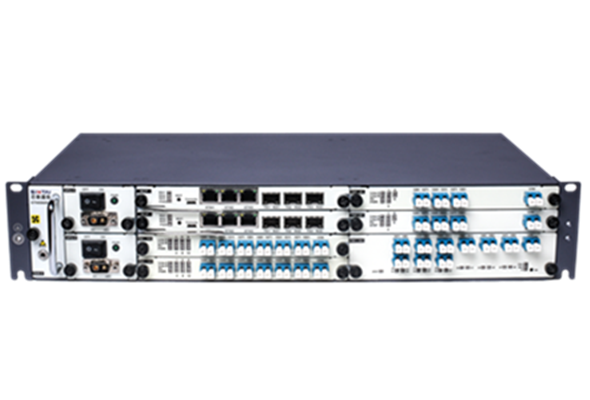
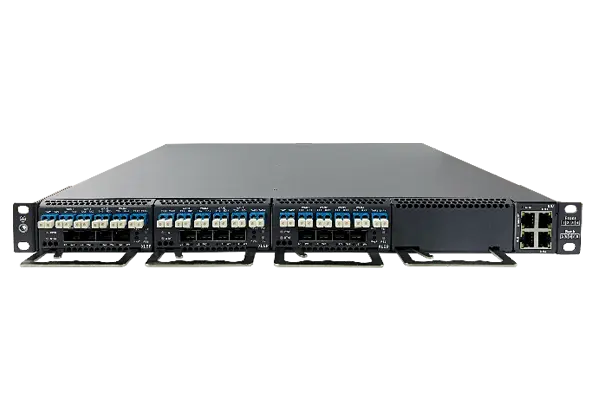
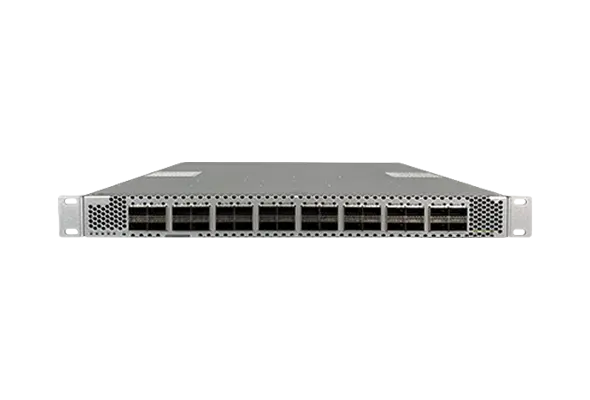
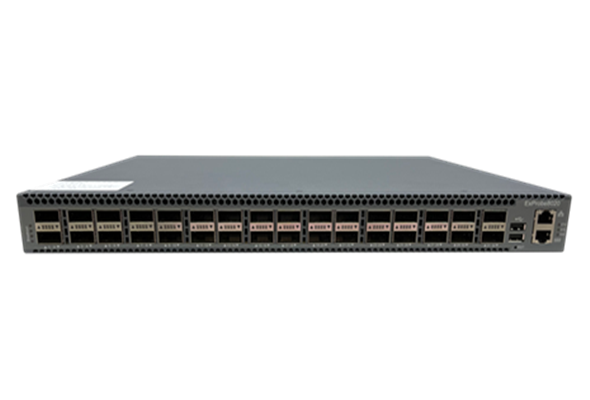
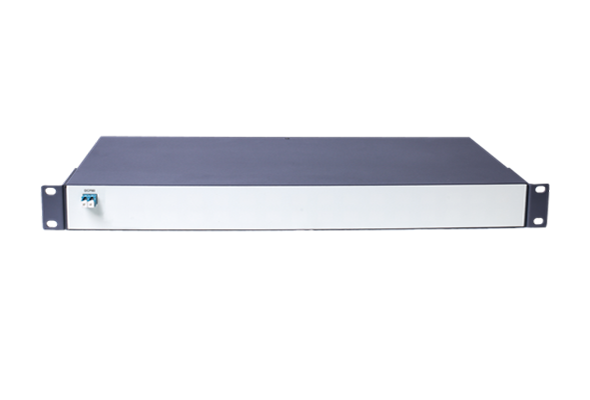
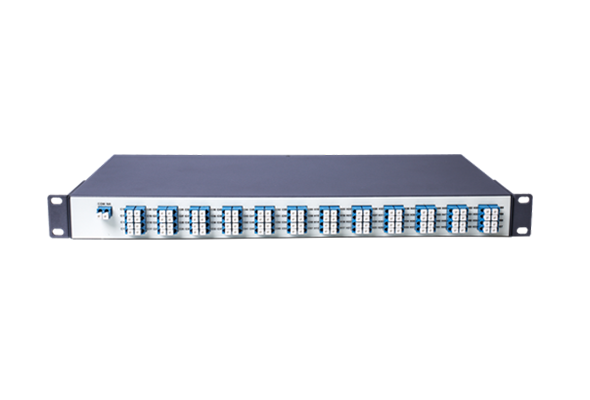
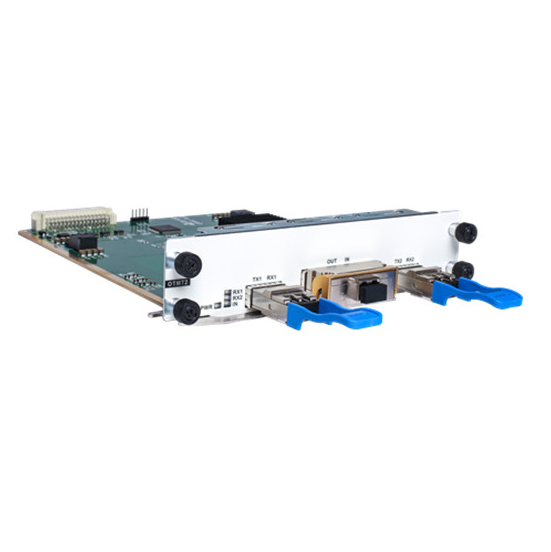
A muxponder is an optical transport device that aggregates multiple lower-speed client signals into one higher-speed uplink or wavelength. In OTN networks, it maps client services into optical transport channels using ITU OTN mapping standards, allowing multiple services to share a single high-capacity wavelength rather than each requiring a dedicated one. Sintai's muxponder product range includes configurations such as 2×100G to 200G and 4×100G to 400G service aggregation — meaning that what previously required two or four separate wavelengths can be carried on a single 200G or 400G wavelength after muxponder aggregation.
This aggregation efficiency changes the capacity equation for DCI networks in several important ways. Fiber utilization improves because more traffic is carried per wavelength. Wavelength consumption decreases because fewer wavelengths are needed for the same total traffic volume. Rack space and power consumption per unit of transported bandwidth decrease because the muxponder consolidates multiple service interfaces into a single platform. And the operational complexity of managing the DCI network decreases because fewer individual wavelengths and interfaces must be monitored and maintained.
The key DCI use cases where muxponder technology creates the most value in 2026 include AI data center interconnection, cloud platform backbone expansion, disaster recovery and backup links, financial data center DCI, ISP and carrier metro networks, enterprise private cloud interconnection, and high-capacity storage replication.
The performance requirement that distinguishes AI and cloud DCI from conventional enterprise networking is not simply bandwidth — it is the combination of high bandwidth and low latency that AI training pipelines, real-time cloud synchronization, and financial transaction systems require simultaneously. Understanding how a muxponder achieves low latency optical transport while aggregating multiple services is essential for evaluating its suitability for latency-sensitive DCI applications.
The data flow through a muxponder system follows a well-defined sequence that is designed to minimize processing delay while maximizing transport efficiency:
Client-side signals from routers, switches, storage systems, and servers enter the muxponder through its client-side ports. The muxponder's OTN mapping engine maps each client service into an OTN container — an Optical channel Data Unit — using ITU-standard OTN framing. Multiple OTN containers are then multiplexed together and converted into a single high-capacity line-side optical signal — a 200G or 400G coherent wavelength — for transmission across the DCI route. At the far-end data center, the process is reversed: the high-capacity wavelength is received, demultiplexed, and each client service is recovered and delivered to its destination interface.
The latency contribution of this process is determined primarily by the OTN mapping and framing overhead, the coherent digital signal processing in the line-side optical interface, and the physical propagation delay of the fiber span. Modern muxponder designs minimize the processing latency through optimized DSP architectures and streamlined OTN framing — Sintai highlights ultra-low latency data transmission as a key benefit of its muxponder platform, making it suitable for the latency-sensitive AI and financial DCI applications that dominate 2026 data center interconnect requirements.
The line-side optical interface of a modern data center interconnect DCI muxponder uses coherent optical transmission technology — a modulation and detection approach that dramatically increases the spectral efficiency and reach of optical transmission compared with direct-detect alternatives. A 200G coherent muxponder can transmit 200 gigabits per second over a single wavelength across metropolitan and regional DCI distances, using advanced modulation formats and digital signal processing to compensate for fiber impairments such as chromatic dispersion and polarization mode dispersion.
This coherent transmission capability is what makes the 200G coherent muxponder the preferred choice for DCI routes where the distance between data centers exceeds the reach of simpler optical interfaces — typically anything beyond 10 to 40 kilometers, depending on the fiber plant characteristics. For AI data center clusters that may be distributed across a metropolitan area, or for financial disaster recovery sites that must be separated by regulatory-mandated distances, coherent muxponder technology provides the combination of high capacity and adequate reach that the application requires.
One of the most operationally important features of a well-designed muxponder platform for DCI applications is the ability to add capacity without interrupting existing services. Sintai's muxponder platform supports hot-swappable modules — service cards and optical units that can be inserted or replaced while the chassis remains powered and other services continue to operate. This hot-swap capability means that a data center can start with a 200G muxponder configuration and expand to 400G by adding modules, without taking the DCI link offline or interrupting the services that are already running on it. For AI data centers and cloud platforms where DCI downtime has immediate operational consequences, this non-disruptive upgrade path is a critical operational advantage.
A complete DCI muxponder deployment is a system of complementary components, each performing a specific function in the overall architecture. Understanding what each component does — and how they work together — is essential for planning a muxponder deployment that delivers the performance, scalability, and operational visibility that 2026 DCI requirements demand.
Client-Side Ports
The client-side ports of the muxponder connect to the routers, switches, storage systems, and servers in the data center that generate the traffic to be transported across the DCI link. A flexible muxponder platform supports multiple client-side interface rates — 10G, 25G, 100G, and 400G — allowing it to aggregate traffic from different generations of data center equipment into a single high-capacity transport channel. This multi-rate client support is particularly valuable in data centers that are in the process of upgrading from 100G to 400G server and switch interfaces, as the muxponder can aggregate both old and new interface rates simultaneously.
OTN Mapping Engine
The OTN mapping engine is the functional core of the muxponder — the component that maps client services into OTN containers and multiplexes them together for transport. ITU OTN mapping provides standardized framing, overhead, and forward error correction that improve the reliability and manageability of the transported services. The OTN layer also provides per-service performance monitoring — bit error rate, signal quality, and alarm status — that gives network operations teams visibility into the health of individual services within the aggregated transport channel.
Line-Side Coherent Optical Interface
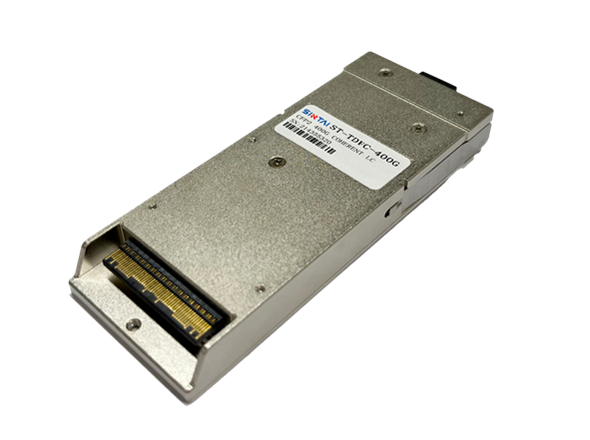
The line-side optical interface generates the high-capacity coherent wavelength that carries the aggregated traffic across the DCI fiber span. For a 200G coherent muxponder, this interface uses advanced coherent modulation — typically DP-QPSK or DP-16QAM depending on the distance and fiber quality — to transmit 200 gigabits per second over a single wavelength. The coherent DSP in the line-side interface compensates for fiber impairments in real time, maintaining signal quality across the full DCI route without requiring dispersion compensation fiber or other passive optical compensation elements.
Chassis Platform and Modular Architecture
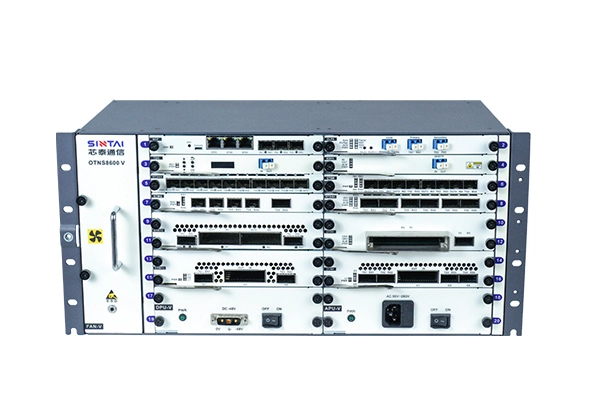
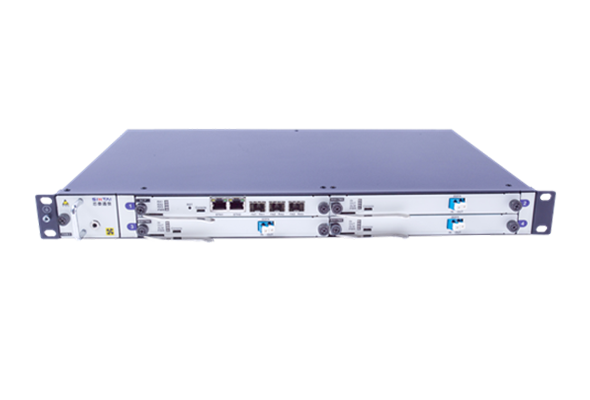
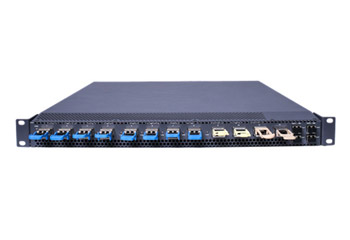
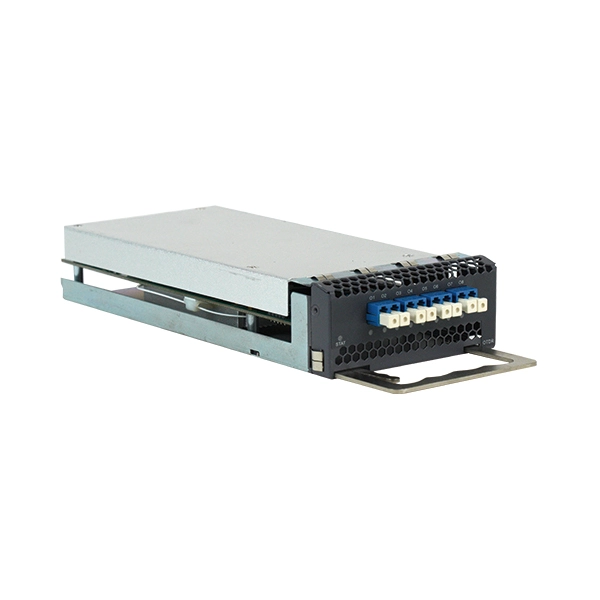
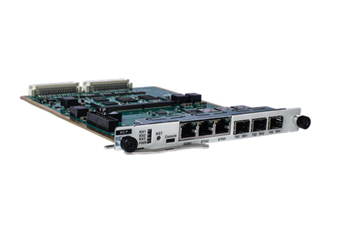
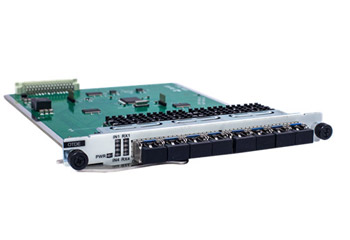
The chassis platform hosts the service cards, optical units, and management modules that make up the muxponder system. A modular chassis architecture allows the system to be configured with the exact combination of client ports, line-side interfaces, and capacity that the current DCI requirement demands — and then expanded by adding modules as traffic grows. This modularity is the foundation of the scalable OTN network design approach that allows data centers to grow DCI capacity incrementally rather than in large, disruptive steps.
Network Management and Monitoring
Centralized network management provides real-time visibility into optical power levels, bit error rates, service alarms, and link performance across the entire muxponder system. Sintai highlights remote management and monitoring as a key benefit of its muxponder platform — enabling data center operations teams to detect and respond to performance degradation before it causes service interruption, and to manage the DCI network from a central operations center without requiring on-site intervention for routine monitoring tasks.
| Component | Function | DCI Value |
|---|---|---|
| Client-side ports | Connect routers, switches, storage, and servers | Supports multiple service rates from 10G to 400G |
| OTN mapping engine | Maps services into OTN channels | Enables efficient multi-service aggregation |
| Line-side coherent optical interface | Transmits high-capacity WDM signals | Supports 200G and 400G DCI transmission |
| Coherent DSP | Compensates fiber impairments | Extends reach for metropolitan and regional DCI |
| Chassis platform | Hosts service cards and optical units | Enables modular non-disruptive expansion |
| Network management | Monitors service and link performance | Improves operational visibility and fault response |
| Hot-swappable modules | Allow capacity expansion without service interruption | Reduces upgrade risk for live DCI networks |
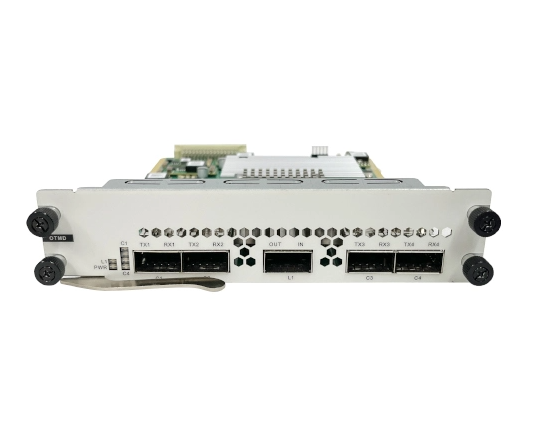
Selecting the right muxponder configuration for a specific DCI application requires matching the product's capacity, aggregation efficiency, and operational characteristics to the actual traffic profile, growth trajectory, and operational requirements of the data center interconnect. The following comparison framework helps data center network planners make this decision systematically.
| Option | Best Application | Primary Advantage | Key Consideration |
|---|---|---|---|
| 200G muxponder | Medium-scale DCI, 100G service aggregation, metro DCI | Efficient upgrade from 100G links, proven coherent technology | May require capacity expansion planning for rapid AI traffic growth |
| 400G muxponder | AI data centers, large-scale cloud DCI, high-capacity backbone | Higher aggregation efficiency, better bandwidth density, future-ready | Requires compatible optical design and fiber plant assessment |
| OTN muxponder | Multi-service aggregation with OTN-based transport and monitoring | Flexible service mapping, per-service performance monitoring | Requires proper service planning and OTN expertise |
| Transponder | Point-to-point wavelength conversion, single-service transport | Simple deployment for single-service links | Less efficient for multi-service aggregation scenarios |
The fundamental difference between a muxponder and a transponder is the aggregation function. A transponder converts one client signal into one transport wavelength — a one-to-one relationship that is appropriate when a single high-rate service needs to be transported across a DCI link. A muxponder aggregates multiple lower-rate client signals into one higher-rate transport wavelength — a many-to-one relationship that is appropriate when multiple services need to share a DCI link efficiently.
For 2026 DCI applications where the traffic mix includes multiple 100G services from different routers, storage systems, and application servers, a data center interconnect DCI muxponder provides significantly better fiber utilization and operational efficiency than deploying individual transponders for each service. The aggregation efficiency of a 4×100G to 400G muxponder configuration means that four services that would previously have required four separate wavelengths can now be carried on a single 400G wavelength — reducing wavelength consumption by 75% for that traffic group.
Higher DCI aggregation efficiency that reduces wavelength consumption and fiber utilization pressure
Better bandwidth density that reduces rack space and power consumption per gigabit of transported capacity
Easier migration from 100G to 200G and 400G DCI without service interruption through hot-swappable module expansion
Support for scalable OTN network design that grows incrementally with traffic demand
Lower operational complexity for multi-service DCI environments through consolidated management
Reduced total cost of ownership through improved fiber utilization and deferred fiber plant expansion
Sintai's muxponder platform highlights benefits including reduced wavelength requirements, lower power consumption and rack space, flexible service configuration, remote management and monitoring, enhanced protection capabilities, and ultra-low latency data transmission — a combination that directly addresses the operational and performance requirements of 2026 AI and cloud DCI deployments.
Rapid AI bandwidth growth can outpace capacity planning if the muxponder platform is not selected with adequate headroom for expansion. Mixed service rates — 10G, 25G, 100G, and 400G coexisting in the same data center — require a muxponder with flexible client-side interface support. Migration from existing DCI infrastructure without service interruption requires careful planning of the cutover sequence and validation of hot-swap procedures before the maintenance window. Long-distance DCI routes may require coherent optical design assessment to confirm that the selected muxponder's line-side interface can achieve the required reach with the available fiber plant.
Deploying a muxponder system that delivers the performance and scalability that 2026 DCI requirements demand involves more than selecting the right product. The pre-deployment planning process, commissioning validation, and ongoing maintenance practices all affect whether the system performs as designed throughout its operational life.
Before deploying a muxponder for a DCI application, data center network planners should confirm the following:
Establish current DCI bandwidth demand and projected growth over the next three to five years — particularly accounting for AI workload expansion and cloud platform scaling
Identify all client service rates that need to be aggregated: 10G, 25G, 100G, 200G, or 400G
Choose between 200G and 400G muxponder capacity based on current traffic volume and growth trajectory
Confirm the fiber distance between data centers and assess whether coherent transmission is required for the span length
Evaluate the existing fiber plant for chromatic dispersion, polarization mode dispersion, and optical loss — parameters that affect coherent muxponder reach
Plan rack space, power budget, and cooling capacity for the muxponder chassis and associated equipment
Confirm hot-swappable module support and plan the capacity expansion sequence for future upgrades
Verify compatibility between the muxponder client interfaces and the routers, switches, and storage systems in the data center
Review network management and monitoring functions — confirm that the management system provides the alarm visibility and performance data that the operations team requires
Select an OTN muxponder supplier that can provide technical support for optical design validation, commissioning assistance, and ongoing capacity planning guidance
Monitor optical power levels, bit error rates, pre-FEC error counts, and service alarms through the network management system at regular intervals — early detection of performance degradation prevents service interruptions
Keep spare optical modules, service cards, and power supply units available for the most critical DCI nodes — having spares on hand reduces the mean time to restore service after a hardware failure
Use remote management tools to detect link degradation trends before they reach alarm thresholds — gradual performance degradation is often detectable weeks before it causes a service failure
Clean optical connectors before every installation or replacement using appropriate cleaning tools — connector contamination is one of the most common causes of optical power loss in DCI systems
Label all client ports, line ports, wavelength assignments, and service mappings clearly and maintain up-to-date documentation — accurate records are essential for fast troubleshooting and efficient capacity planning
Test protection switching and failover mechanisms during planned maintenance windows to verify that redundancy functions are operational before they are needed in a real failure event
Record module serial numbers, firmware versions, optical power baselines, and service mapping configurations — this documentation supports warranty claims, failure analysis, and capacity planning
Plan capacity upgrades proactively before peak AI training seasons or cloud platform expansion events — adding muxponder modules before traffic reaches the capacity limit avoids the operational risk of emergency upgrades under traffic pressure
In 2026, data centers need more than higher bandwidth — they need scalable, low-latency, and operationally efficient DCI networks that can grow with AI workloads, cloud platform expansion, and enterprise application demands without requiring disruptive network reconstruction every time traffic outgrows the current capacity. A muxponder delivers exactly this capability: aggregating multiple client services into high-capacity 200G and 400G wavelengths, improving fiber utilization, reducing wavelength consumption, and enabling non-disruptive bandwidth scaling through hot-swappable modular expansion.
For AI computing clusters, cloud platform backbone networks, financial disaster recovery links, and enterprise private cloud interconnections, the right OTN muxponder — selected for the specific traffic profile, distance requirements, and growth trajectory of the DCI application — provides the combination of aggregation efficiency, low latency optical transport, and scalable OTN network design that 2026 inter-data center bandwidth demands require.
Sintai supports DCI and OTN network construction with muxponder products covering 100G, 200G, and 400G configurations, alongside optical transport platforms, optical protection systems, transceivers, and network management solutions for high-capacity optical networking across data center, carrier, enterprise, and industrial applications.
Contact Sintai today to discuss your DCI bandwidth roadmap, compare 200G and 400G muxponder configurations for your specific traffic profile and fiber plant, explore coherent optical design options for your DCI route, and develop a scalable OTN network architecture that supports your data center's growth through 2026 and beyond.
Q1: What is a muxponder and how does it differ from a transponder?
A muxponder is an optical transport device that aggregates multiple lower-rate client signals into a single higher-rate transport wavelength — a many-to-one relationship that improves fiber utilization and reduces wavelength consumption in multi-service DCI environments. A transponder converts one client signal into one transport wavelength — a one-to-one relationship that is appropriate for single-service point-to-point links but less efficient when multiple services need to share a DCI route. For 2026 DCI applications where AI, cloud, storage, and enterprise traffic must all be transported between data centers, a muxponder provides significantly better aggregation efficiency than deploying individual transponders for each service.
Q2: Why is an OTN muxponder important for AI data center interconnect in 2026?
AI training workloads generate massive inter-data center traffic that must be transported with high bandwidth and low latency simultaneously. An otn muxponder addresses both requirements: it aggregates multiple 100G client services into 200G or 400G transport wavelengths, reducing the number of wavelengths needed and improving fiber utilization, while its OTN mapping and coherent optical transmission minimize processing latency and maintain signal quality across the DCI route. The hot-swappable modular architecture also allows AI data centers to expand DCI capacity as training workloads grow without interrupting existing services.
Q3: What is the difference between a 200G and 400G muxponder for DCI applications?
A 200G muxponder is well-suited for medium-scale DCI expansion and 100G service aggregation — for example, aggregating two 100G services into a single 200G wavelength. A 400G muxponder provides higher aggregation efficiency and bandwidth density, aggregating four 100G services into a single 400G wavelength, and is the preferred choice for AI data centers, large-scale cloud DCI, and high-capacity backbone applications where traffic volumes are highest and growth rates are fastest. The choice between 200G and 400G should be based on current traffic volume, projected growth trajectory, and the optical design constraints of the DCI fiber span.
Q4: How does a muxponder support non-disruptive DCI bandwidth upgrades?
A muxponder with hot-swappable modular architecture allows data centers to add capacity by inserting new service cards or optical modules into the chassis while existing services continue to operate on the modules already installed. This means that a data center can start with a 200G muxponder configuration and expand to 400G — or add additional client ports to aggregate more services — without taking the DCI link offline or interrupting the traffic that is already running. This non-disruptive upgrade capability is critical for AI data centers and cloud platforms where DCI downtime has immediate operational and revenue consequences.
Q5: What should data center planners check before deploying a muxponder for DCI?
Data center planners should verify current and projected DCI bandwidth demand including AI workload growth, the client service rates that need to be aggregated, the fiber distance between data centers and whether coherent transmission is required, the existing fiber plant characteristics including chromatic dispersion and optical loss, rack space and power budget availability, hot-swappable module support for future expansion, compatibility between the muxponder client interfaces and existing data center equipment, network management and monitoring capabilities, and the technical support capability of the otn muxponder supplier for optical design validation and ongoing capacity planning guidance.




 English
  русский
  Indonesia
  Español
  português
  العربية
  français
  Deutsch
  हिंदी
हिंदी  tiếng việt