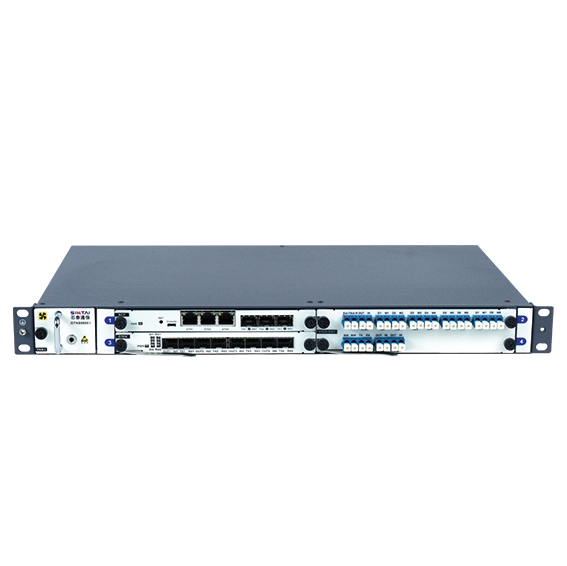

In 2026, the operational continuity of smart factories, power stations, mines, rail systems, ports, oilfields, and remote industrial parks depends on one thing above all else: uninterrupted data flow from the field to the control center. Industrial IoT networks carry real-time data from thousands of sensors, PLCs, safety systems, cameras, and automation controllers — data that drives production decisions, safety responses, and asset management in real time. When that data flow is interrupted, the consequences extend far beyond a dropped connection. Production lines stop. Safety monitoring goes blind. Automated systems lose their control inputs.
The challenge is that industrial environments are among the most hostile operating conditions that network equipment can face. Vibration, dust, humidity, electromagnetic interference, extreme temperatures, and the physical distances between field sites and control centers all create failure risks that standard enterprise networking equipment was never designed to survive. At the access layer, the optical network unit is the device that connects industrial field equipment to the fiber network — and its stability under these conditions directly determines whether the network delivers the data continuity that industrial operations require. At the transport layer, OTN equipment provides the long-distance, high-capacity, and redundant backbone that carries aggregated field data between sites without packet loss, excessive latency, or single-point-of-failure vulnerability.
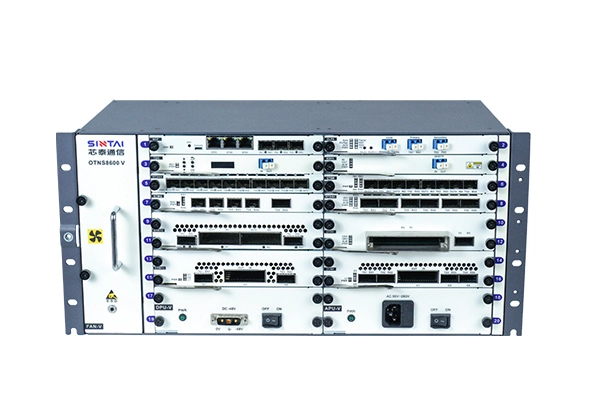
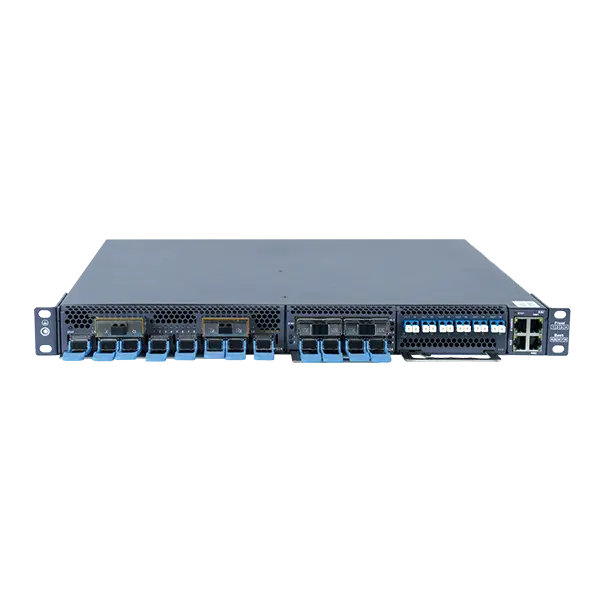
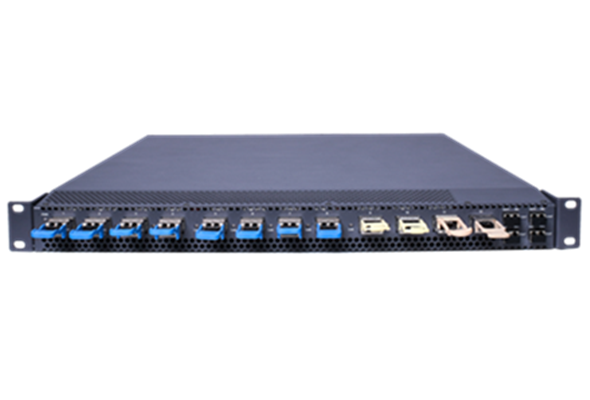
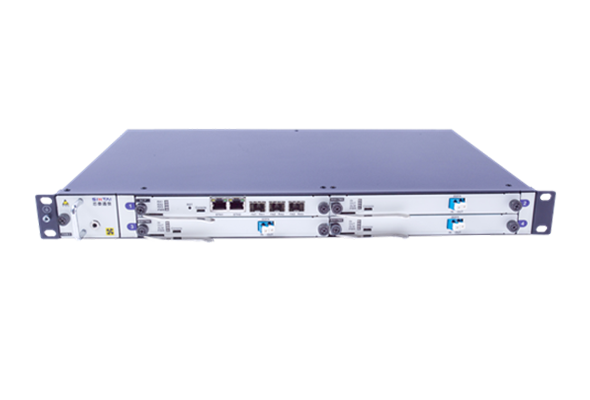
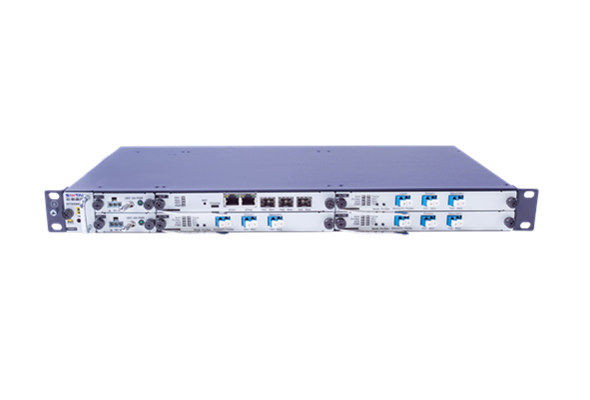
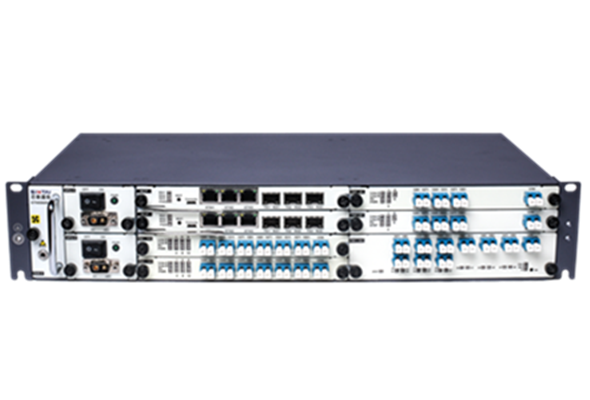
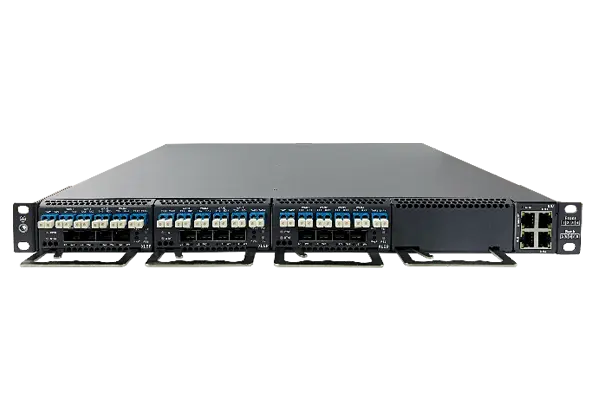
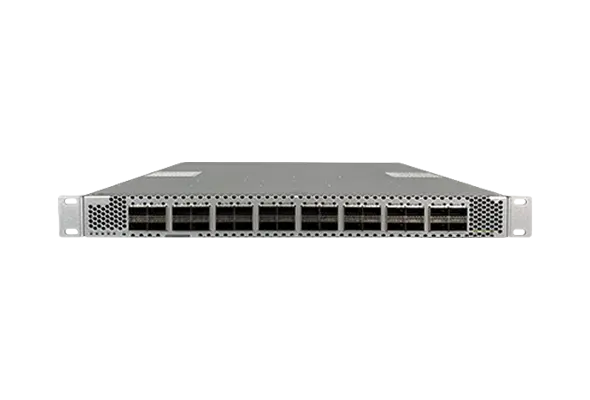
Sintai's optical transport product portfolio addresses both layers of this challenge, with DWDM and CWDM platforms, DCI and OTN platforms, optical protection systems, optical amplifiers, OEO repeaters, transceivers, and network management products designed for multi-scenario optical networking across industrial, utility, transport, and enterprise applications. This guide covers the complete picture for industrial network planners: why optical network unit stability is critical at the industrial edge, how resilient OTN transport protects data across long-distance backbone routes, what network components work together to build a rugged industrial fiber network, how to select the right equipment for different industrial scenarios, and what deployment and maintenance practices protect network performance over the long term. Secondary keywords relevant to this decision — industrial ONU applications, resilient OTN transport, smart factory fiber network, and rugged optical networking — are addressed throughout.

The starting point for understanding why optical network unit selection matters so much in industrial IoT environments is a clear picture of what an ONU does, what threatens its stability in industrial conditions, and what the consequences of access-layer failure look like in practice.
An optical network unit is an access-side optical device that connects end users or field devices to a fiber network. In industrial IoT deployments, the ONU serves as the bridge between distributed field equipment — sensors, PLCs, SCADA terminals, IP cameras, smart meters, motor controllers, and safety systems — and the optical transport backbone that carries their data to aggregation points and ultimately to the central control system.
The ONU's role is deceptively simple in description but critical in practice. Every piece of field data that the control system depends on — every sensor reading, every alarm signal, every camera feed, every PLC status update — passes through the optical network unit at the access layer. If the ONU loses connectivity, the control system loses visibility into everything that ONU serves. In a smart factory, that might mean losing real-time data from an entire production cell. In a power utility, it might mean losing monitoring visibility for a substation. In a mining operation, it might mean losing contact with safety sensors in an underground section.
Industrial ONU applications face environmental conditions that standard enterprise networking equipment is not designed to handle. The specific threats vary by industry and site, but the most common include:
Vibration from heavy machinery, conveyor systems, and industrial vehicles creates mechanical stress on optical connectors, circuit boards, and housing components that accumulates over time and eventually causes intermittent or permanent failures. Dust and particulate contamination — particularly in mining, cement, and manufacturing environments — infiltrates equipment enclosures and contaminates optical connectors, increasing insertion loss and reducing signal quality. Humidity and condensation in outdoor, underground, or coastal industrial environments create corrosion risk for electronic components and optical interfaces. Electromagnetic interference from high-voltage equipment, variable frequency drives, and industrial motors can disrupt the electronic components of access-layer devices that are not adequately shielded.
These environmental threats make rugged optical networking a requirement rather than a preference for industrial IoT deployments — and they make the selection of access-layer equipment that is designed and tested for industrial conditions a critical procurement decision.
The optical network unit handles field access, but access stability alone is not sufficient for industrial IoT data continuity. The transport backbone that carries aggregated field data between sites must also be resilient — capable of maintaining data flow when individual fiber routes fail, when optical amplifiers require maintenance, or when network conditions change due to environmental factors. This is where OTN equipment becomes essential. Sintai's OTN platform highlights high bandwidth, low latency, and highly reliable transmission services as the core value proposition — exactly the characteristics that industrial IoT backbone transport requires.
Understanding the complete data flow from industrial field device to control center — and where resilience mechanisms protect that flow at each stage — is essential for designing an industrial fiber network that meets 2026 smart industry reliability standards.
The path that field data takes from an industrial sensor or PLC to the central control system passes through several network layers, each of which must perform reliably for end-to-end data continuity:
Field devices — sensors, PLCs, IP cameras, smart meters, safety systems, and automation controllers — generate continuous streams of operational data. These devices connect to the optical network unit at the access layer, which converts their electrical or Ethernet signals into optical signals for transmission over the fiber network. Multiple optical network units serving different field areas are aggregated at a local aggregation point, which collects traffic from multiple access links and presents it to the transport backbone. The OTN transport layer carries the aggregated traffic across long-distance backbone routes between industrial sites, substations, remote facilities, and the central control center. Network management systems monitor the health of every link, device, and service across the entire network, providing alarm visibility and enabling rapid fault response.
For industrial networks, the goal is not simply high bandwidth — it is continuous data availability. A smart factory fiber network that delivers gigabit throughput but experiences minutes of downtime when a fiber route is cut does not meet the reliability standard that industrial operations require. The resilient OTN transport layer addresses this requirement through several mechanisms:
1+1 optical line protection is the most important resilience mechanism for industrial backbone transport. In a 1+1 protection configuration, traffic is simultaneously transmitted over both a working path and a protection path. If the working path fails — due to a fiber cut, equipment failure, or signal degradation — the network automatically switches to the protection path, typically within 50 milliseconds. This switching speed is fast enough to be transparent to most industrial applications, meaning that the control system continues to receive field data without interruption even when a physical fiber route fails.
Optical amplification extends the reach of the transport backbone across the long distances that characterize industrial deployments — power transmission corridors, mining complexes, port facilities, and railway lines where the distance between field sites and control centers may exceed the unamplified transmission range of standard optical transceivers.
Low-latency transport is critical for industrial control applications where the round-trip time between a field sensor and the control system affects the responsiveness of automated control loops. OTN transport platforms that minimize latency support tighter control loop timing and faster safety system response.
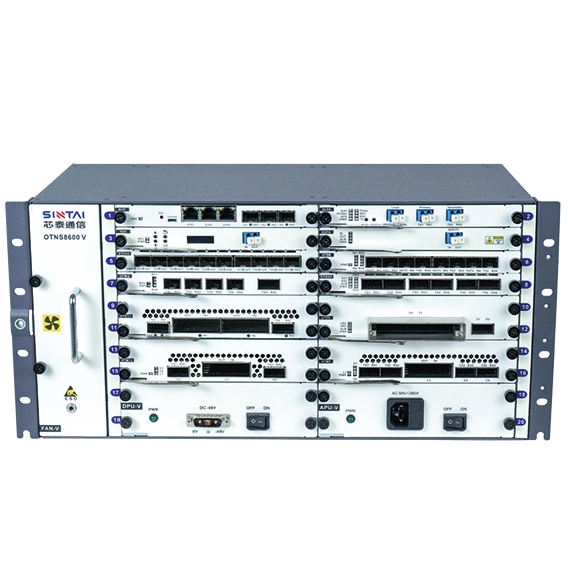
A reliable industrial fiber network is a system of complementary components, each performing a specific function in the overall architecture. The optical network unit at the access layer must work together with aggregation equipment, OTN equipment platforms, optical protection systems, amplifiers, transceivers, and network management tools to deliver the end-to-end resilience that industrial IoT requires.
Optical Network Unit — Industrial Edge Access
The optical network unit is the access-layer device that connects industrial field equipment to the fiber network. For industrial ONU applications, the key selection criteria are environmental ruggedness — the ability to operate reliably in the dust, vibration, humidity, and temperature extremes of the deployment site — and interface compatibility with the field devices being connected. Industrial ONUs must support the Ethernet, serial, and protocol interfaces used by PLCs, SCADA systems, and industrial sensors, and must maintain stable optical connectivity under the mechanical and environmental stresses of the industrial environment.
Aggregation Equipment
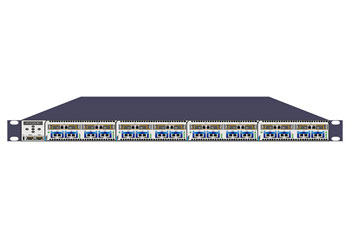
Aggregation devices collect traffic from multiple optical network units serving different field areas and present the combined traffic to the OTN transport backbone. In a smart factory fiber network, aggregation equipment may be located in a factory floor distribution room, collecting ONU traffic from multiple production cells before forwarding it to the site OTN platform.
OTN Equipment — Muxponder and Transponder
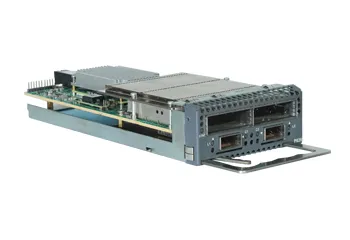
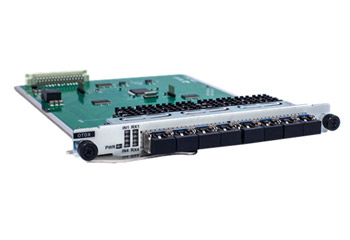
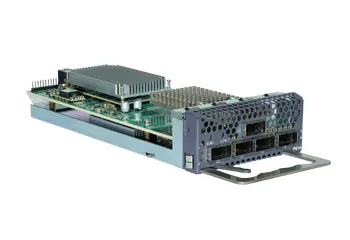
OTN equipment including muxponders and transponders maps client services — Ethernet, SDH, Fibre Channel, and other protocols — onto the OTN transport layer for long-distance transmission. They provide the protocol adaptation and signal conditioning that allows diverse industrial traffic types to be carried efficiently over the OTN backbone, supporting the high-capacity, low-latency transport that industrial IoT backbone routes require.
Optical Amplifiers
Optical amplifiers extend the transmission distance of the fiber backbone beyond the reach of standard transceivers. For industrial deployments where the distance between field sites and control centers exceeds 80 to 100 kilometers — common in power utility, mining, and railway applications — optical amplifiers are essential components of the transport architecture.
Optical Line 1+1 Protection
Sintai's optical protection product range includes optical line 1+1 protection and optical bypass 1+1 protection equipment. These devices implement the protection switching mechanism that allows the network to automatically reroute traffic from a failed working path to a protection path within milliseconds — the core resilience mechanism that makes resilient OTN transport suitable for industrial applications where data continuity is a safety and operational requirement.
Network Management System
Centralized network management provides alarm monitoring, link health visibility, service status tracking, and fault location capability across the entire industrial fiber network. For industrial operations where network faults must be identified and resolved quickly to minimize production impact, network management is not an optional feature — it is an operational necessity.
| Network Component | Function | Industrial Value |
|---|---|---|
| Optical network unit | Connects field devices to optical access network | Enables stable edge data collection in harsh environments |
| Aggregation equipment | Collects multiple access points | Simplifies factory or site network architecture |
| OTN equipment — muxponder and transponder | Maps client services to optical transport layer | Supports long-distance high-capacity transmission across industrial backbone routes |
| Optical amplifier | Extends optical transmission distance | Essential for mines, power corridors, and remote sites |
| Optical line 1+1 protection | Provides protected optical path switching | Reduces interruption risk during fiber failure |
| Network management system | Monitors alarms and service status | Supports preventive maintenance and fast fault response |
| Optical transceivers | Provide optical interface connectivity | Matches distance, speed, and wavelength requirements |
Different industrial environments place different demands on the fiber network architecture. The right combination of optical network unit access equipment and OTN equipment infrastructure depends on the specific operational requirements, environmental conditions, distance constraints, and redundancy needs of each deployment scenario.
Smart Factory Fiber Network
Smart factory deployments require stable, low-latency access for PLCs, industrial robots, machine vision cameras, MES systems, and production monitoring sensors. The optical network unit at the factory floor level must handle the electromagnetic interference environment created by variable frequency drives and high-current equipment, while the OTN transport backbone must support the low latency required for real-time production control. Centralized network management is particularly valuable in smart factory environments where rapid fault location minimizes production downtime.
Power Utility Networks
Power utility deployments combine long-distance transmission requirements — substations may be separated by tens or hundreds of kilometers — with extremely high availability requirements, since power grid monitoring and protection systems cannot tolerate data interruptions. OTN transport with 1+1 optical line protection is the standard architecture for power utility backbone networks, and optical amplification is typically required for the longest transmission spans.
Mining Site Networks
Mining deployments face the most challenging environmental conditions of any industrial IoT application — dust, vibration, humidity, and the physical complexity of underground or open-pit mine layouts. Rugged optical networking equipment that is rated for mining environments, combined with redundant fiber paths and OTN protection switching, provides the combination of environmental resilience and network resilience that mining operations require.
Port Automation Networks
Port automation deployments require high bandwidth for camera systems, crane control, container tracking, and vessel management, combined with the resilience needed to maintain operations during the weather events and physical activity that characterize port environments. OTN transport with protection switching and centralized management supports the continuous operation that port automation systems demand.
Railway and Highway Corridor Networks
Linear infrastructure deployments along railway lines and highways involve distributed access points spread over long distances, with OTN transport providing the backbone connectivity between access points and the central operations center. Protection switching is critical for these deployments because a single fiber cut along the corridor can isolate multiple access points simultaneously.
More stable optical network unit access in harsh environmental conditions
Lower packet loss risk over long-distance OTN backbone routes
Faster automatic recovery from fiber cuts through 1+1 protection switching
Centralized alarm monitoring and faster fault location through network management
Scalable bandwidth capacity for future industrial IoT expansion
Higher reliability for safety-critical and production-critical data flows
Better support for the continuous operation requirements of 2026 smart industry standards
Harsh environments can damage edge access devices that are not rated for industrial conditions — equipment selection must account for the specific environmental threats at each deployment site. Long-distance links may require optical amplification and dispersion compensation planning that is not needed for shorter enterprise deployments. Single-fiber routes without protection create high downtime risk when fiber cuts occur — protection path planning must be part of the initial network design. Poor network monitoring delays fault response and extends the duration of service interruptions. Device interoperability and future scaling requirements must be evaluated during the initial design phase to avoid costly redesign as the network grows.
Deploying an industrial fiber network that delivers the reliability that 2026 smart industry requires involves more than selecting the right equipment. The deployment planning process, commissioning validation, and ongoing maintenance practices all affect whether the network performs as designed throughout its operational life.
Before deploying an optical network unit and OTN transport network for an industrial IoT application, network planners should confirm the following:
Identify all field devices requiring network access: PLCs, sensors, IP cameras, smart meters, safety systems, robots, and automation controllers
Establish bandwidth requirements for current deployment and projected growth over the next three to five years
Determine the distance between field sites, aggregation points, and the central control center — and identify whether optical amplification will be required
Confirm whether 1+1 optical line protection is required for the backbone routes, and whether dual physical fiber routes are available or must be planned
Assess the environmental conditions at each ONU deployment location: dust levels, vibration intensity, humidity, temperature range, and electromagnetic interference sources
Confirm latency requirements for control and safety system applications — some industrial control loops have strict round-trip time requirements
Evaluate whether the OTN equipment platform can support future service additions and bandwidth upgrades without requiring hardware replacement
Confirm network management requirements — centralized monitoring, alarm notification, and remote fault diagnosis capabilities
Verify transceiver compatibility between the optical network unit, aggregation equipment, and OTN platform at each interface
Engage Sintai's technical team to validate the complete network design — including OTN equipment selection, optical protection configuration, amplifier placement, and transceiver specification — before procurement commitment
Inspect fiber links regularly for physical damage, excessive bending, contamination at connectors, and splice point degradation — particularly in mining and outdoor industrial environments where physical damage risk is highest
Monitor optical power levels and link margin through the network management system — gradual power level degradation can indicate connector contamination or fiber degradation before it causes a service failure
Test 1+1 protection switching during planned maintenance windows to verify that the protection path is functional and that switching time meets the specification — a protection path that has never been tested may fail when it is actually needed
Clean optical connectors before every reconnection using appropriate cleaning tools — contaminated connectors are one of the most common causes of optical power loss and intermittent connectivity problems
Maintain an on-site inventory of spare transceivers, patch cords, and power supply modules for the most critical network nodes — having spares available reduces the time to restore service after a hardware failure
Label all fiber routes, ONU locations, and OTN port assignments clearly and maintain up-to-date network documentation — accurate documentation is essential for fast fault location and efficient troubleshooting
Review alarm history from the network management system regularly to identify recurring weak points — patterns in alarm data can reveal developing problems before they cause service interruptions
Schedule preventive inspection and cleaning before peak production seasons or planned high-demand periods — proactive maintenance reduces the risk of network failures during the periods when they would have the greatest operational impact
In 2026, the reliability of industrial IoT networks is not a technical preference — it is an operational requirement that directly affects production continuity, safety system performance, and the return on investment of smart industry infrastructure. An optical network unit at the access layer connects industrial field devices to the fiber network with the stability that harsh industrial environments demand. Resilient OTN transport at the backbone layer carries critical field data across long distances with the redundancy, low latency, and protection switching that ensures data continuity even when individual fiber routes fail.
By combining industrial ONU applications with Sintai's protected OTN equipment platforms, 1+1 optical line protection, optical amplification, and centralized network management, industrial enterprises can build smart factory fiber networks and rugged optical networking infrastructure that meets the reliability standards of 2026 smart industry — and that scales to support the expanding IoT data volumes that future industrial automation will generate.
Sintai supports optical transport networking across telecom, ISP, electric power, IDC, education, transport, radio and television, network security, big data, and cloud services — with DWDM and CWDM platforms, DCI and OTN platforms, optical protection systems, optical amplifiers, transceivers, and network management solutions that cover the complete optical transport network architecture from access to backbone.
Contact Sintai today to discuss your industrial IoT network topology, optical network unit access requirements,OTN equipment selection, 1+1 protection path design, optical amplification planning, and long-distance transport architecture for your smart factory, power utility, mining, port, railway, or industrial park deployment.
Q1: What is an optical network unit and what role does it play in industrial IoT networks?
An optical network unit is an access-side optical device that connects industrial field equipment — including sensors, PLCs, IP cameras, smart meters, safety systems, and automation controllers — to the fiber network. In industrial IoT deployments, the ONU serves as the bridge between distributed field devices and the optical transport backbone that carries their data to aggregation points and the central control system. The stability of the ONU under the harsh environmental conditions of industrial sites — vibration, dust, humidity, and electromagnetic interference — directly determines whether the network delivers the data continuity that industrial operations require.
Q2: Why does industrial ONU access need OTN equipment as a resilient transport backend?
The optical network unit handles field access, but access stability alone is not sufficient for industrial IoT data continuity. OTN equipment provides the long-distance, high-capacity, and resilient backbone transport that industrial networks require — including 1+1 protection switching, optical amplification, and low-latency transmission that ensures data continuity even when individual fiber routes fail. Without OTN equipment forming a resilient transport layer, a single fiber cut between the field site and the control center can interrupt all data flow regardless of how stable the access-layer ONUs are. Sintai's OTN platforms are designed specifically to address this backbone resilience requirement for industrial, utility, and transport network deployments.
Q3: What is 1+1 optical line protection and why is it important for industrial networks?
1+1 optical line protection is a redundancy mechanism that simultaneously transmits traffic over both a working path and a protection path. If the working path fails — due to a fiber cut, equipment failure, or signal degradation — the network automatically switches to the protection path, typically within 50 milliseconds. This switching speed is fast enough to be transparent to most industrial applications, meaning that the control system continues to receive field data without interruption even when a physical fiber route fails. For industrial networks where data interruptions affect production continuity or safety system performance, 1+1 protection is a critical design requirement rather than an optional feature.
Q4: Which industrial environments most need rugged optical networking with OTN protection?
Smart factories, power utilities, mining operations, port automation systems, railway and highway corridor networks, oilfield communications, and remote industrial parks all require rugged optical networking when field conditions are harsh and data continuity is critical. Mining sites face the most extreme environmental conditions — dust, vibration, humidity, and complex physical layouts — while power utilities and railway networks face the longest transmission distances and the highest availability requirements. Each of these environments benefits from the combination of rugged ONU access equipment and resilient OTN transport with protection switching.
Q5: What should industrial network planners check before deploying an optical network unit and OTN platform?
Industrial network planners should verify bandwidth requirements for current and projected future traffic, transmission distances and whether optical amplification is required, environmental conditions at each ONU deployment location, redundancy requirements and whether dual physical fiber routes are available, latency requirements for control and safety applications, OTN equipment platform scalability for future expansion, network management requirements for centralized monitoring and alarm response, transceiver compatibility across all network interfaces, and the availability of technical support from the equipment supplier for network design validation, commissioning, and ongoing maintenance guidance.




 English
  русский
  Indonesia
  Español
  português
  العربية
  français
  Deutsch
  हिंदी
हिंदी  tiếng việt