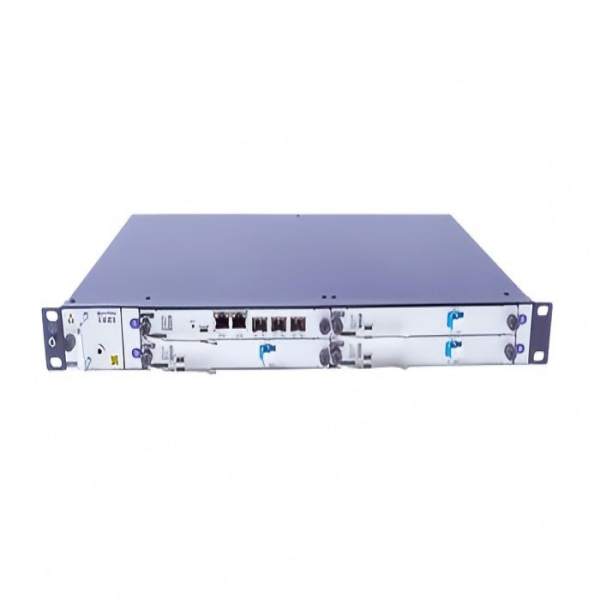

Choosing the right optical amplification technology can directly influence the performance and scalability of a fiber transmission network. In a DWDM system, where multiple wavelength channels share the same fiber, maintaining sufficient optical power and signal quality across long transmission spans is a constant engineering challenge.
This is where the EDFA amplifier and raman amplifier become important options for network designers. Both technologies are widely used to compensate for fiber attenuation, but they take different approaches to signal amplification and provide different advantages depending on network distance, capacity requirements, and deployment conditions.
An EDFA amplifier has become a standard choice in many optical communication systems due to its stable gain performance and straightforward deployment, while a raman amplifier offers unique benefits in scenarios where extended transmission distance and improved optical performance are required.
Rather than replacing one technology with another, modern optical network design often requires a careful evaluation of where each amplification method provides the greatest value. Understanding their differences helps operators build more reliable and efficient optical infrastructures.
The fundamental difference between an EDFA amplifier and a raman amplifier comes from their amplification mechanisms. Although both technologies increase optical signal power, they rely on completely different physical processes.
An EDFA amplifier uses erbium-doped fiber as the gain medium. Inside the amplifier, pump lasers provide energy to erbium ions within the doped fiber. When an optical signal passes through this region, the stored energy is transferred to the signal wavelength, increasing its power without requiring optical-to-electrical conversion.
This design allows the EDFA amplifier to provide high optical gain with a relatively simple structure. It operates mainly in the C-band and L-band wavelength ranges, which are commonly used in modern DWDM transmission systems. Because of its mature technology and reliable performance, EDFA has become one of the most widely deployed optical amplification solutions.
A raman amplifier works differently. It uses stimulated Raman scattering, where a high-power pump laser transfers energy to the optical signal through interaction within the transmission fiber. Instead of relying on a dedicated doped fiber section, Raman amplification can use the existing fiber link itself as part of the amplification process.
This distributed amplification capability allows Raman technology to improve signal performance over longer transmission spans. It can reduce the impact of fiber loss and improve optical signal quality in demanding applications such as ultra-long-distance transmission and submarine communication systems.
In practical optical networks, EDFA and Raman amplifiers are not always competing technologies. Many advanced systems combine both approaches to achieve better transmission performance and greater design flexibility.

When selecting an optical amplifier, engineers typically consider several performance factors, including gain capability, noise figure, bandwidth support, installation complexity, and long-term operational stability.
| Comparison Factor | EDFA Amplifier | Raman Amplifier |
|---|---|---|
| Amplification Method | Uses erbium-doped fiber as the gain medium | Uses stimulated Raman scattering through pump laser interaction |
| Deployment Style | Usually installed as a discrete amplifier at network nodes | Can provide distributed amplification along transmission fiber |
| Typical Network Use | DWDM systems, metro networks, backbone transmission | Long-haul links, submarine systems, high-performance optical networks |
| Main Advantage | Mature technology, reliable operation, simple integration | Improved transmission reach and optical performance flexibility |
| Design Complexity | Generally easier to deploy and maintain | Requires more detailed optical planning and pump management |
The main advantage of an EDFA amplifier is its balance between performance and practicality. It provides sufficient gain for many commercial optical networks while keeping system design relatively simple. For operators managing large DWDM infrastructures, this reliability is one of the reasons EDFA remains widely used.
A raman amplifier provides advantages in applications where transmission distance and optical margin are more challenging. Because amplification can occur along the fiber span, Raman technology can improve signal conditions before attenuation becomes too severe.
However, Raman systems usually require more detailed engineering. Pump wavelength selection, fiber characteristics, and safety considerations all need to be carefully evaluated during network design.
DWDM networks rely on precise optical power management because multiple wavelength channels share the same fiber infrastructure. As transmission distance increases, fiber attenuation gradually reduces signal strength, making optical amplification essential.
The EDFA amplifier is widely used in DWDM systems because it can amplify multiple wavelength channels simultaneously. This capability allows operators to increase network capacity without installing additional fiber cables.
In a typical long-distance transmission route, EDFA amplifiers are installed at specific intervals to compensate for optical loss. Their stable gain characteristics make them suitable for backbone networks where predictable performance is required.
A raman amplifier takes a different approach by providing amplification closer to the transmission path. This distributed amplification can improve optical signal-to-noise performance and extend the achievable transmission distance.
For extremely demanding applications, combining EDFA and Raman amplification can provide additional benefits. Raman amplification can improve the optical conditions of the transmission span, while EDFA units provide additional gain where required.
This hybrid approach is increasingly considered in advanced optical network designs where operators need to balance capacity, distance, and system efficiency.
The choice between an EDFA amplifier and a raman amplifier depends on the actual requirements of the optical network rather than a simple comparison of specifications.
For many telecom networks, metro optical systems, and standard DWDM deployments, EDFA remains the preferred option because it offers reliable amplification with relatively straightforward integration. Its long history of commercial use also means that engineers are familiar with installation, maintenance, and troubleshooting processes.
Raman amplification becomes more suitable when the network requires additional transmission reach, better optical performance, or improved signal quality over challenging fiber spans. Long-haul communication links and submarine cable systems are examples where Raman technology can provide significant advantages.
During the selection process, engineers usually evaluate transmission distance, fiber type, wavelength plan, available optical power margin, maintenance requirements, and future expansion plans.
Optical Sintai provides optical communication solutions for different network environments, helping customers select suitable amplification technologies according to their project requirements. Available solutions can be explored through the Optical Sintai optical product portfolio.
The range of optical amplifier applications continues to expand as communication networks become more complex. Different industries choose EDFA or Raman technology depending on their performance requirements.
In telecommunications backbone networks, the EDFA amplifier is commonly used to maintain signal strength across long fiber routes. Its reliable performance makes it suitable for large-scale commercial networks that require stable operation over many years.
Data center interconnection is another important area for optical amplification. As distributed data centers exchange increasing amounts of information, optical amplifiers help maintain transmission quality across regional and long-distance connections.
For submarine communication systems and ultra-long-distance fiber links, the raman amplifier can provide additional transmission advantages by improving optical performance across extended spans.
Other optical amplifier applications include cable television networks, research communication systems, industrial optical networks, and specialized high-capacity transmission environments.
The best amplification solution depends on the specific balance between transmission requirements, network complexity, and operational goals.
Deploying an optical amplifier is only one part of building an efficient transmission system. Proper planning and optimization are equally important for achieving stable network performance.
For networks using an EDFA amplifier, engineers need to configure appropriate gain levels to ensure sufficient signal power without creating excessive optical power at the receiver. Proper amplifier placement is also important because it affects overall transmission quality.
For a raman amplifier, optimization requires more detailed analysis because the amplification process depends on fiber characteristics and pump laser performance. Accurate modeling helps engineers determine suitable pump power and achieve better transmission efficiency.
Network monitoring also plays an important role in maintaining amplifier performance. By tracking optical power levels, signal quality, and operating conditions, operators can identify potential issues and perform maintenance before service disruption occurs.
Optical Sintai works with customers to evaluate optical network requirements and provide suitable amplification solutions for different applications. For technical consultation and project discussions, customers can contact the team through the Optical Sintai contact page.
Both the EDFA amplifier and raman amplifier play important roles in modern optical communication networks. EDFA remains a widely adopted solution because of its mature technology, reliable performance, and compatibility with DWDM systems. Raman amplification provides additional advantages for applications that require extended transmission distance and improved optical performance.
There is no universal choice between the two technologies. The right solution depends on network architecture, transmission distance, bandwidth requirements, and future development plans.
By understanding the differences between EDFA and Raman amplification, network operators can make better decisions when designing optical infrastructures and improving long-distance transmission performance.
An EDFA amplifier is used to increase optical signal power in fiber communication systems, especially DWDM and long-distance optical transmission networks.
A Raman amplifier uses stimulated Raman scattering to transfer energy from a pump laser to optical signals within the fiber, providing optical amplification.
Neither technology is suitable for every situation. EDFA is widely used for general optical networks, while Raman amplification is often selected for longer and more demanding transmission applications.
Yes. Many advanced optical networks combine EDFA and Raman amplification to achieve better transmission distance and performance.
Optical amplifier applications include DWDM networks, telecom backbone systems, submarine communication links, data center interconnections, and industrial optical networks.
The selection depends on transmission distance, network design, fiber conditions, bandwidth requirements, and future expansion plans.



 English
  русский
  Indonesia
  Español
  português
  العربية
  français
  Deutsch
  हिंदी
हिंदी  tiếng việt