
In 2026, a growing number of enterprises find themselves caught in a frustrating position: their 10Gb SFP and 10Gb SFP+ switch infrastructure is performing reliably, their network equipment has years of useful life remaining, but the fiber links connecting their buildings, campuses, data rooms, and industrial facilities have run out of available capacity. Traffic volumes are climbing — driven by cloud applications, video surveillance, storage replication, and distributed computing — but the physical fiber plant between sites cannot carry any more independent 10G channels. The instinctive response is to replace the 10G switches with 100G platforms, but for many enterprises this means new switch hardware, new optics, new cabling designs, higher power and cooling requirements, migration downtime, and capital expenditure that the budget cannot absorb in a single cycle.
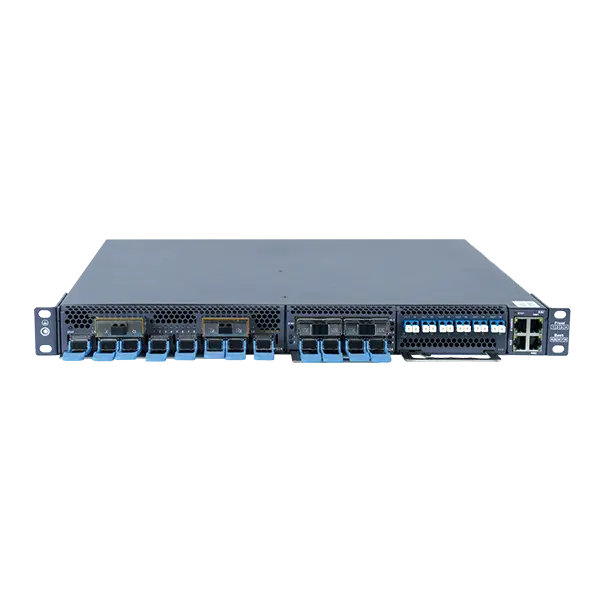
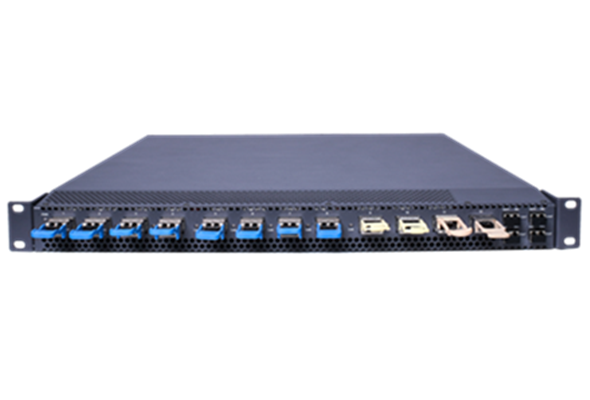
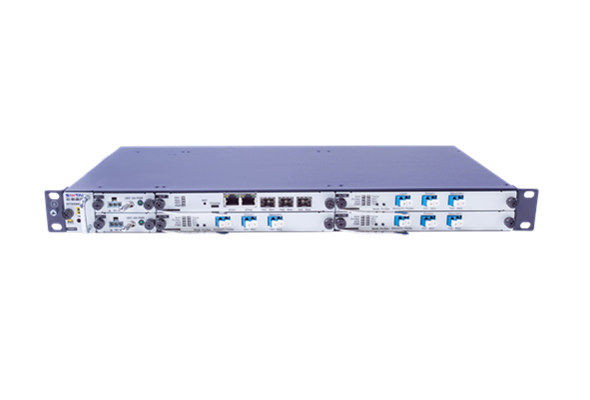
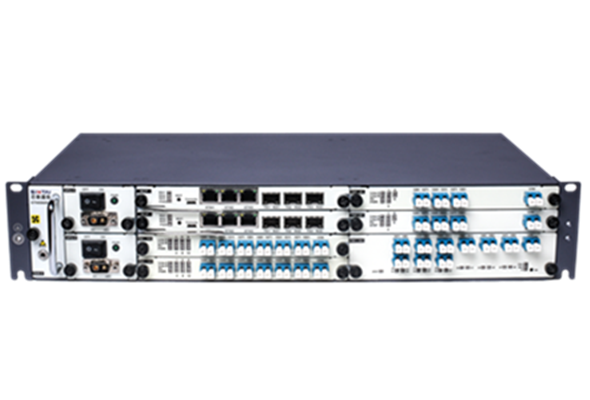
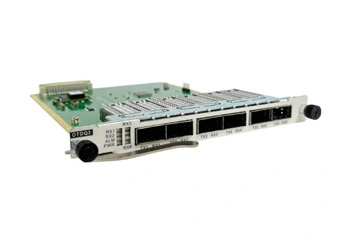
There is a more practical path. An OTN transponder converts standard 10Gb SFP+ client signals into DWDM or CWDM wavelengths, allowing multiple independent 10G services to travel over the same fiber pair simultaneously — multiplying the effective capacity of the existing fiber plant without touching the switches, without replacing the optics, and without the migration risk of a full hardware refresh. Sintai's 10 SFP+ C/DWDM Transponder supports 100M to 11.3G service access and converts services into WDM standard wavelength optical signals for wavelength division multiplexing, with line-side support for CWDM 18-wave and DWDM 96-wave at 50GHz spacing — making it a technically capable and commercially practical solution for enterprises facing fiber exhaustion in 2026.
This guide covers the complete picture for enterprise network planners: why fiber exhaustion has become the defining bandwidth constraint for 10G networks in 2026, how an OTN transponder solves this problem through wavelength conversion, what components make up a complete 10Gb SFP expansion system, how the transponder approach compares to a full 100G switch replacement on ROI, and what deployment and maintenance practices protect network performance over the long term. Secondary keywords relevant to this decision — 10Gb SFP+ expansion, 10G DWDM transponder cost, upgrade fiber capacity, and Sintai optical solutions — are addressed throughout.
To understand why the OTN transponder approach has gained traction among enterprise network planners in 2026, it helps to start with a clear picture of how fiber exhaustion actually develops — and why it creates a problem that cannot be solved simply by upgrading switch hardware.
Enterprise fiber plants are typically designed with a fixed number of fiber cores between buildings, floors, campuses, or remote sites. When the network was originally installed, the number of fiber cores seemed adequate — each 10G service consumed one fiber pair, and the total number of services was well within the available fiber count. Over time, as the enterprise added servers, storage systems, surveillance cameras, wireless access points, and cloud connectivity requirements, the number of 10G services grew. Each new service consumed another fiber pair. And eventually — often faster than the network team anticipated — the available fiber cores were fully allocated.
At this point, the enterprise faces a genuine capacity constraint that cannot be resolved by upgrading switch ports alone. A 100G switch port is faster than a 10G port, but if there is no available fiber to connect it to the remote site, the higher port speed provides no benefit. The bottleneck is not the switch — it is the fiber plant.
The conventional response to network capacity constraints is to upgrade the switching infrastructure — replace 10G switches with 100G platforms and deploy new high-speed optics. For core network upgrades where the switching capacity itself is the bottleneck, this approach is appropriate. But for the specific problem of fiber exhaustion on inter-site links where the 10G switches are still performing reliably, a full switch replacement addresses the wrong constraint.
A full 100G switch replacement requires new switch hardware at both ends of every affected link, new 100G optical modules, potential cabling changes to support the new hardware form factors, reconfiguration of network management and monitoring systems, and a migration window during which services must be moved from the old infrastructure to the new. For budget-limited enterprises where the 10G switches have years of useful life remaining, this represents a significant capital and operational expenditure that may not be justified by the actual performance requirement.
An OTN transponder takes a different approach to the fiber exhaustion problem. Rather than replacing the switches that generate the 10G traffic, it converts the 10G optical signals from the existing SFP+ ports into specific DWDM or CWDM wavelengths — and then combines multiple wavelengths onto a single fiber pair using a mux/demux unit. The result is that a fiber pair that previously carried one 10G service can now carry multiple independent 10G services simultaneously, each on its own wavelength. The switches are unchanged. The SFP+ optics are unchanged. The fiber plant is unchanged. Only the transponder and mux/demux equipment is added — and the effective capacity of the fiber link multiplies.
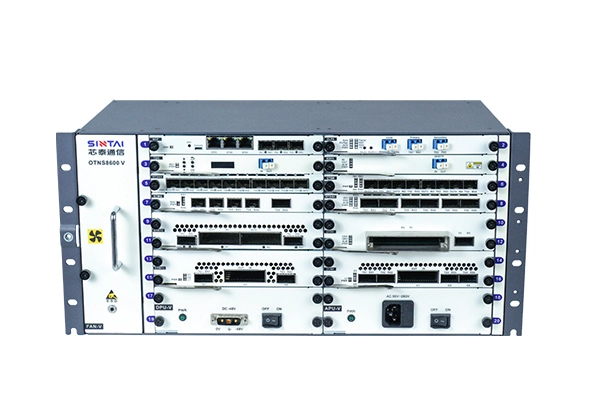
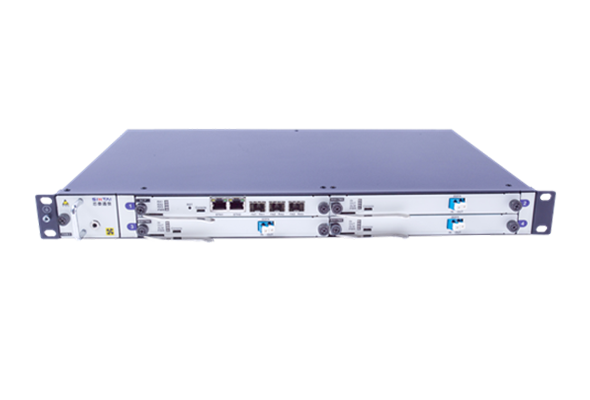
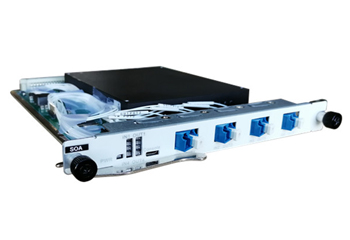
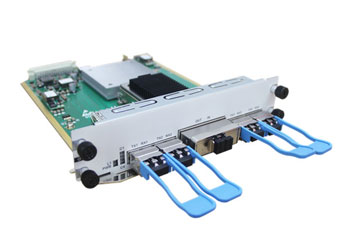
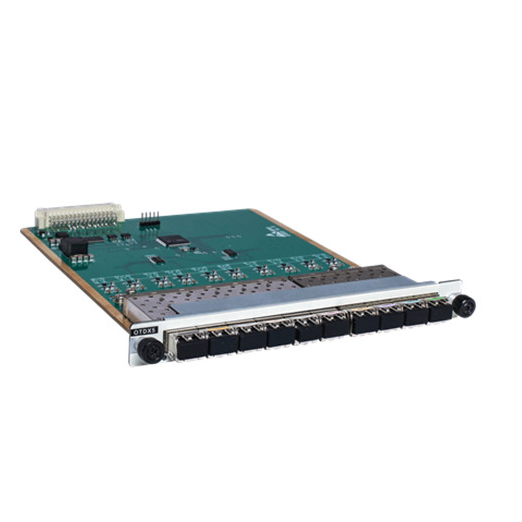
Sintai's 5×10G OTU service board supports five service-access channels at 100M to 11.3G rates and converts them into five WDM standard wavelength optical signals — meaning that a single chassis with multiple service boards can aggregate a significant number of 10G services onto a limited fiber plant, making 10Gb SFP+ expansion practical and cost-effective for enterprises that cannot justify a full switch replacement cycle.
Understanding the signal flow through a 10G DWDM transponder system — and where the wavelength conversion and multiplexing occur — is essential for evaluating whether this approach is technically appropriate for a specific enterprise network scenario.
The core function of an OTN transponder is wavelength conversion: taking a client-side optical signal at a standard short-reach or grey wavelength — the type of signal that a standard 10Gb SFP+ module generates — and converting it into a specific DWDM or CWDM wavelength that can be combined with other wavelengths on the same fiber. This conversion is what enables multiple independent 10G services to share a single fiber pair without interfering with each other.
The signal flow through a complete 10Gb SFP expansion system follows a well-defined sequence:
The existing switch sends a standard 10Gb SFP+ optical signal from its client-side port — typically a grey wavelength short-reach signal that is not compatible with WDM multiplexing. The transponder receives this client-side signal and converts it into a specific DWDM or CWDM wavelength assigned to that service channel. Multiple transponder outputs — each on a different wavelength — are fed into a DWDM or CWDM mux/demux unit, which combines all the wavelengths onto a single fiber pair for transmission to the remote site. At the remote end, a second mux/demux unit separates the wavelengths, and a second set of transponders converts each wavelength back into a standard grey-wavelength signal that the remote switch's SFP+ port can receive. The remote switch sees a standard 10G optical signal — exactly as if it were connected to the near-end switch by a direct fiber link.
The wavelength conversion process is completely transparent to the switches at both ends of the link. The switches continue to use their existing 10Gb SFP+ modules and see standard 10G optical signals on their client ports. No switch configuration changes are required. No new switch hardware is needed. The entire WDM conversion and multiplexing process happens in the transponder layer, which sits between the switches and the fiber plant.
This transparency is the key commercial advantage of the OTN transponder approach for enterprises facing fiber exhaustion. The capital cost of the transponder and mux/demux equipment is typically a fraction of the cost of replacing the switches at both ends of the link — and the migration can be performed without taking the existing services offline, since the transponder system can be installed and tested before the services are cut over to the new wavelength-based path.
Sintai's 10 SFP+ C/DWDM Transponder supports both CWDM 18-wave and DWDM 96-wave at 50GHz spacing on the line side, giving network planners flexibility to choose the wavelength plan that best matches their capacity requirements and fiber plant characteristics.
CWDM — Coarse Wavelength Division Multiplexing — uses wider wavelength spacing and supports up to 18 wavelengths on a single fiber pair. CWDM is typically used for shorter distances and lower channel counts, and its wider wavelength spacing makes it compatible with passive mux/demux units that do not require temperature control. DWDM — Dense Wavelength Division Multiplexing — uses tighter 50GHz wavelength spacing and supports up to 96 wavelengths on a single fiber pair, providing much higher total capacity for enterprises that need to aggregate a large number of 10G services or plan to add more services over time. The choice between CWDM and DWDM depends on the number of services to be aggregated, the fiber distance, and the long-term capacity growth plan.

A successful 10Gb SFP+ expansion project requires more than a single transponder device. It is a system of complementary optical components that work together to convert, multiplex, transport, and manage multiple 10G services over a limited fiber plant. Understanding what each component does — and how they interact — is essential for designing a complete and reliable expansion system.
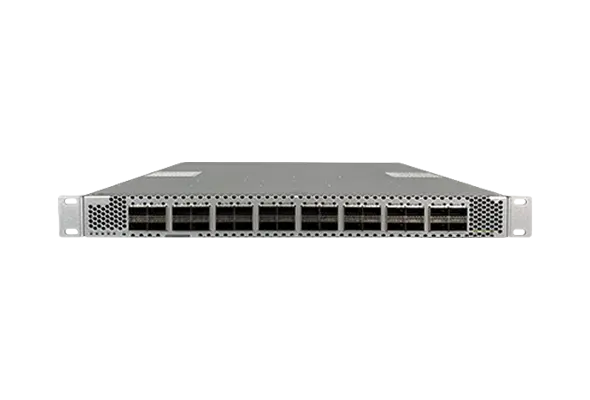
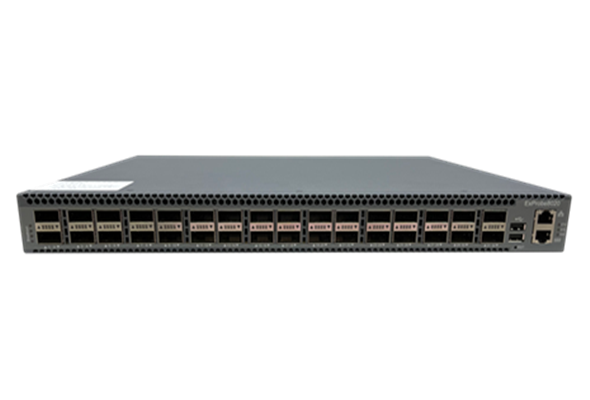
10Gb SFP+ Switch — Existing Client-Side Infrastructure
The existing 10G switch is the starting point of the expansion system. Its SFP+ client ports generate the standard grey-wavelength optical signals that the transponder will convert into WDM wavelengths. Because the transponder approach is transparent to the switch, no changes to the switch hardware, software, or configuration are required. This is the component that the enterprise has already invested in — and the one that the transponder approach is specifically designed to protect.
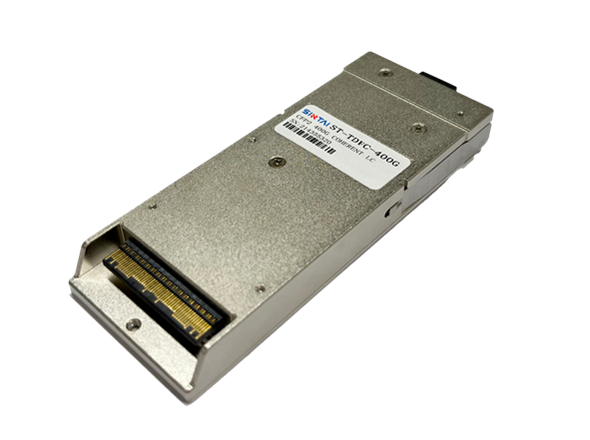
10G DWDM Transponder — The Wavelength Conversion Engine
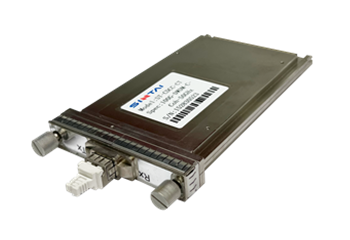
The OTN transponder is the core of the expansion system. It receives the client-side 10G signal from the switch's SFP+ port and converts it into a specific DWDM or CWDM wavelength for WDM transmission. Sintai's transponder supports service types including FE, GE, 10GE, Fibre Channel rates from 1G to 10G, STM-1/4/16/64, OTU1/OTU2/OTU2e, and CPRI-1 to CPRI-8 — making it suitable for enterprise Ethernet, storage area networks, telecom transport, and private network applications that all need to share the same fiber plant.
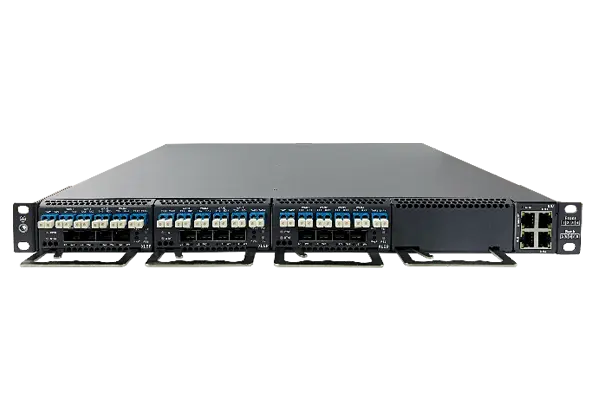
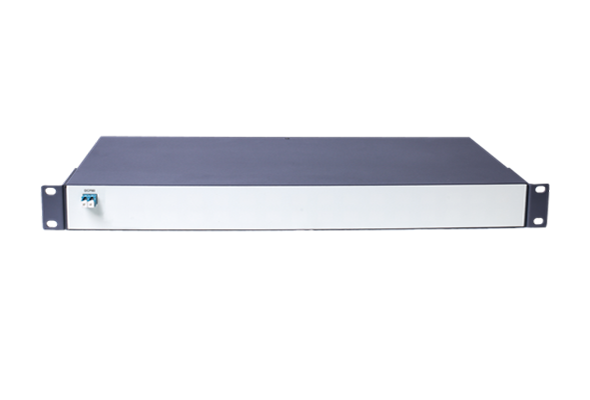
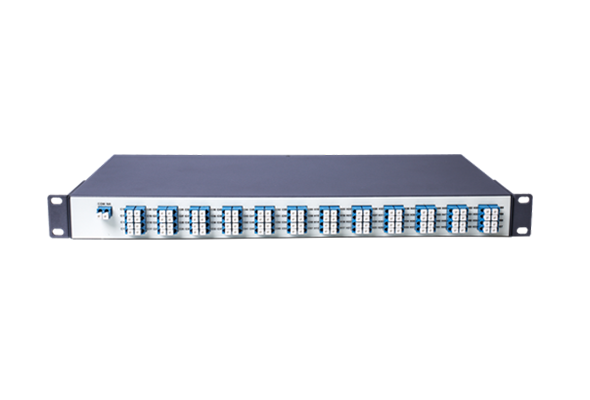
DWDM and CWDM Mux/Demux Units
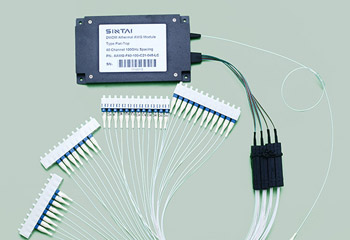
The mux/demux unit combines multiple wavelengths from multiple transponders onto a single fiber pair for transmission, and separates them again at the remote end. Passive mux/demux units require no power and introduce minimal insertion loss, making them a reliable and low-maintenance component of the expansion system. The number of wavelengths that the mux/demux supports determines the maximum number of 10G services that can be aggregated onto the fiber pair.
OTN Platform Chassis
The chassis hosts the transponder service boards and provides the mechanical, power, and management infrastructure for the expansion system. A modular chassis architecture allows the system to be configured with the number of service boards needed for the current service count and expanded by adding boards as more services need to be aggregated. This modularity supports the phased upgrade approach that is most practical for budget-limited enterprises.
Optical Amplifiers
For fiber spans that exceed the passive transmission range of the transponder's line-side optical interface — typically beyond 80 to 100 kilometers depending on fiber quality and channel count — optical amplifiers extend the reach of the WDM signal. For most enterprise campus and metropolitan area applications, passive transmission without amplification is adequate, but amplifiers are available for longer-distance requirements.
Network Management
Sintai's transponder supports optical module temperature, current, voltage, optical power, and other performance monitoring parameters — giving network operations teams real-time visibility into the health of each service channel and the ability to detect performance degradation before it causes a service interruption.
| Component | Function | Value for 10G Expansion |
|---|---|---|
| 10Gb SFP+ switch | Existing service access | Protects current hardware investment |
| OTN transponder | Converts 10G service to WDM wavelength | Enables multi-channel transport over one fiber pair |
| DWDM and CWDM mux/demux | Combines and separates wavelengths | Multiplies fiber capacity without new fiber |
| OTN platform chassis | Hosts service boards | Supports modular phased deployment |
| Optical amplifier | Extends transmission distance | Useful for long inter-site links |
| Network management | Monitors optical status and alarms | Improves maintenance visibility and fault response |
| Optical modules | Provide client-side and line-side interfaces | Match distance and wavelength requirements |
The decision between a transponder-based 10Gb SFP+ expansion and a full 100G switch replacement should be based on a clear analysis of total cost, migration risk, and the actual performance requirement — not on the assumption that newer technology is always the better investment.
When the 10G DWDM Transponder Approach Delivers Better ROI
The transponder approach is most attractive when the existing 10G switches are still reliable and have significant remaining useful life, when the fiber plant between sites is exhausted and adding new fiber is expensive or impractical, when the traffic growth requirement can be met by aggregating more 10G services rather than upgrading to higher port speeds, when migration downtime must be minimized, and when the capital budget favors a phased expansion over a full infrastructure replacement.
In these scenarios, the 10G DWDM transponder cost is typically a fraction of the cost of replacing the switches at both ends of the link with 100G platforms — particularly when the switch replacement would also require new 100G optics, cabling changes, and the operational cost of the migration itself. The transponder approach preserves the existing switch investment, adds capacity to the fiber plant without new fiber deployment, and can be implemented with minimal service interruption.
When a 100G Switch Upgrade Is the Right Choice
A full 100G switch upgrade is more appropriate when the switching capacity itself — not just the fiber capacity — is the bottleneck, when the existing 10G switches are approaching end of life and would need to be replaced regardless, when the traffic profile requires higher per-flow bandwidth than 10G can provide, or when the network architecture is being redesigned for other reasons that make a comprehensive refresh practical.
| Option | Best Application | Primary Advantage | Key Consideration |
|---|---|---|---|
| 10G DWDM transponder | Existing 10G networks with fiber exhaustion | Lower cost, protects switch investment, no migration downtime | Requires wavelength planning and chassis space |
| New 100G switch | Core network refresh or high-density backbone | Higher port speed and future capacity headroom | Higher hardware cost and migration complexity |
| New fiber deployment | Sites with no available optical route | Physical capacity increase | Slow, costly, and construction-dependent |
| Additional 10G links | Networks with spare fiber cores | Simple deployment | Not applicable when fiber is exhausted |
The transponder-based 10Gb SFP+ expansion approach is particularly well-suited to enterprise campus networks connecting multiple buildings over a fixed fiber plant, industrial parks and manufacturing facilities where laying new fiber between buildings is disruptive and expensive, healthcare campuses where network migration downtime has patient care implications, education campuses with aging fiber infrastructure and growing bandwidth demands, financial institutions where migration risk must be minimized, and colocation data centers where tenants need to expand inter-rack connectivity without new fiber provisioning.
Sintai optical solutions support enterprise, carrier, ISP, electric power, IDC, education, transport, and industrial network applications — with a product ecosystem that includes DWDM and CWDM platforms, OTU transponders, muxponders, network management, optical amplifiers, optical protection systems, and optical transceivers to support the complete range of optical transport requirements from 10G expansion to 400G DCI.
Deploying a transponder-based 10Gb SFP+ expansion system that delivers reliable performance over the long term requires careful pre-deployment planning, systematic commissioning, and ongoing maintenance practices that protect optical performance as the system ages and traffic grows.
Before selecting and deploying a 10G DWDM transponder solution, network planners should confirm the following:
Count the number of 10G services that need to be carried over the fiber-exhausted link — both current services and projected additions over the next three to five years
Confirm that the existing switches use standard SFP+ optical ports that are compatible with the transponder's client-side interface
Count the available fiber cores between sites — confirm whether a single fiber pair is available for the WDM link, or whether multiple pairs can be used
Measure the fiber distance between sites and confirm whether passive DWDM or CWDM transmission is adequate, or whether optical amplification will be required
Choose between CWDM and DWDM based on the number of wavelengths required now and in the future — CWDM for lower channel counts, DWDM for higher capacity requirements
Confirm the service types that need to be supported — Ethernet, Fibre Channel, STM, OTU, or CPRI — and verify that the selected transponder supports all required service types
Assess chassis space availability in the equipment rooms at both ends of the link
Calculate the 10G DWDM transponder cost against the cost of a full 100G switch replacement — including switch hardware, optics, cabling, and migration labor — to confirm the ROI case
Confirm network management requirements — whether centralized monitoring and alarm management are needed
Engage Sintai's technical team to validate the optical power budget, wavelength plan, and system design before procurement commitment
Monitor optical power levels, module temperature, voltage, and current through the network management system at regular intervals — Sintai's transponder supports all of these parameters, enabling proactive detection of performance degradation before it causes service interruption
Maintain wavelength documentation for every service channel — a clear record of which service is on which wavelength is essential for fast troubleshooting when a channel experiences problems
Clean optical connectors before every installation, replacement, or reconnection — connector contamination is one of the most common causes of optical power loss and intermittent connectivity in WDM systems
Label all client-side ports, line-side ports, and mux/demux ports clearly with service identifiers and wavelength assignments — accurate labeling reduces troubleshooting time significantly
Keep spare SFP+ modules, patch cords, and transponder service boards available for the most critical links — having spares on hand reduces the time to restore service after a hardware failure
Check alarm history through the network management system regularly to identify recurring weak points — patterns in alarm data can reveal developing problems before they cause service interruptions
Review the wavelength plan and remaining capacity before adding new services — confirm that adequate wavelength slots are available and that the optical power budget can support additional channels
Record module serial numbers, firmware versions, service mappings, and wavelength allocations — this documentation supports warranty claims, failure analysis, and future capacity planning
For enterprises facing fiber exhaustion in 2026, replacing every 10G switch with a 100G platform is not always the most practical or cost-effective first step. A transponder-based 10Gb SFP+ expansion approach allows businesses to reuse their existing switch infrastructure, convert standard 10G SFP+ signals into WDM wavelengths, and carry multiple independent services over a single fiber pair — multiplying the effective capacity of the existing fiber plant without the capital cost, migration risk, or operational disruption of a full hardware replacement.
The 10G DWDM transponder cost advantage over a complete 100G switch refresh is most significant for enterprises where the switches are still reliable, the fiber plant is exhausted, and the traffic growth requirement can be met by aggregating more 10G services rather than upgrading to higher port speeds. For these scenarios, Sintai optical solutions provide a technically capable and commercially practical path to upgrade fiber capacity without rebuilding the network from scratch.
Sintai provides optical transport products including OTU transponders, DWDM and CWDM platforms, optical transceivers, mux/demux units, optical amplifiers, and network management solutions to support scalable enterprise and carrier optical networks across a wide range of service types, distances, and capacity requirements.
Contact Sintai today to evaluate your current 10G switch environment, calculate the ROI of a transponder-based expansion against a full 100G switch replacement, confirm the wavelength plan and optical power budget for your specific fiber plant, and design a cost-effective 10Gb SFP+ expansion solution for your fiber-limited network.
Q1: What is a 10Gb SFP DWDM transponder and how does it work?
A 10Gb SFP DWDM transponder is an optical conversion device that receives a standard 10G grey-wavelength signal from an existing switch's SFP+ port and converts it into a specific DWDM or CWDM wavelength for WDM transmission. Multiple transponder outputs — each on a different wavelength — are combined by a mux/demux unit onto a single fiber pair. At the remote end, the wavelengths are separated and each is converted back into a standard grey-wavelength signal that the remote switch's SFP+ port can receive. The process is completely transparent to the switches at both ends, which continue to operate without any configuration changes.
Q2: Why use an OTN transponder instead of replacing 10G switches with 100G platforms?
An OTN transponder solves the fiber exhaustion problem — the actual bottleneck for most enterprises in 2026 — without requiring switch replacement. The transponder multiplies the capacity of the existing fiber plant by carrying multiple 10G services on different wavelengths over the same fiber pair, while the existing switches continue to operate unchanged. The 10G DWDM transponder cost is typically a fraction of the cost of replacing switches at both ends of the link with 100G platforms, including new hardware, optics, cabling, and migration labor. For enterprises where the 10G switches are still reliable and the fiber plant is exhausted, the transponder approach delivers better ROI than a full switch replacement.
Q3: Can a DWDM transponder solution help when all fiber cores between sites are already in use?
Yes — this is precisely the scenario where the transponder approach provides the most value. By converting multiple 10G services into different WDM wavelengths and combining them onto a single fiber pair, a transponder-based solution can carry multiple independent services over a fiber plant that has no remaining spare cores. A single fiber pair that previously carried one 10G service can carry up to 18 services with CWDM or up to 96 services with DWDM after transponder and mux/demux equipment is deployed — without laying new fiber or replacing existing switches.
Q4: What service types does Sintai's 10G transponder support?
Sintai's 10 SFP+ C/DWDM Transponder supports a wide range of service types including Fast Ethernet, Gigabit Ethernet, 10 Gigabit Ethernet, Fibre Channel at 1G, 2G, 4G, 8G, and 10G rates, STM-1, STM-4, STM-16, and STM-64 telecom transport services, OTU1, OTU2, and OTU2e optical transport unit services, and CPRI-1 through CPRI-8 for mobile fronthaul applications. This broad service support makes it suitable for enterprise data networks, storage area networks, telecom transport, and private network applications that all need to share the same fiber plant.
Q5: What should buyers confirm before choosing a 10G DWDM transponder solution?
Buyers should confirm the number of 10G services to be aggregated currently and over the next three to five years, the fiber distance between sites and whether optical amplification is required, the available fiber cores and whether a single fiber pair is available for the WDM link, the choice between CWDM and DWDM based on channel count requirements, the service types that need to be supported, chassis space availability at both ends of the link, network management and monitoring requirements, and the total cost comparison between the transponder approach and a full 100G switch replacement — including hardware, optics, migration labor, and downtime risk — to confirm the ROI case for the specific network scenario.




 English
  русский
  Indonesia
  Español
  português
  العربية
  français
  Deutsch
  हिंदी
हिंदी  tiếng việt