Raman amplifier gain is not a number that can be explained by pump power alone. In an actual fiber link, the available pump power changes as it travels through the fiber, the signal experiences its own attenuation, and the wavelength relationship between pump and signal determines how effectively optical energy can be transferred. Even the same amplifier configuration can behave differently when the fiber type, fiber length, or pumping direction changes.
This makes Raman amplification fundamentally different from simply selecting an amplifier with a higher output rating. When engineers design a Raman optical amplifier, they need to consider where gain is generated along the fiber and how much of that gain remains useful at the receiving end. The objective is not maximum pump power, but an appropriate gain profile that fits the transmission link.
The Raman amplifier working principle provides the basis for understanding this behavior. Through stimulated Raman scattering, energy from a higher-frequency pump is transferred to an optical signal at a longer wavelength as the two propagate through the fiber. Because this interaction takes place continuously along the optical path, pump wavelength, fiber length, attenuation, and pump configuration all influence the resulting gain.
That is why Raman amplifier design is best approached as a balance between several interconnected parameters. Pump power determines how much energy is available for amplification, wavelength controls the spectral relationship between pump and signal, and fiber length determines the available interaction region. The sections below examine how these factors work together and what they mean when specifying a Raman optical amplifier for a real optical transmission system.
Pump power is one of the most visible specifications of a Raman amplifier, but its effect needs to be considered in the context of the complete fiber link. The pump provides the optical energy that drives stimulated Raman scattering, so increasing pump power can increase the available Raman gain when the pump wavelength, fiber characteristics, and signal conditions are appropriate.
This relationship is central to the Raman amplifier working principle. A higher pump level generally increases the strength of the interaction between the pump and signal. However, the signal does not receive the full pump power directly. Energy transfer takes place gradually as the two optical waves propagate through the fiber, while the pump itself is continuously affected by fiber attenuation and Raman interactions.
As a result, simply increasing the pump power does not guarantee a proportional increase in useful signal gain. Higher pump levels can also increase power consumption and place greater demands on pump lasers and other optical components. In a practical system, engineers therefore need to determine how much additional gain is actually obtained from additional pump power.
Another consideration is the desired gain distribution. A high pump level at the beginning of the fiber may create strong local Raman interaction, but the resulting gain profile may not be ideal for every transmission architecture. Depending on the application, designers may instead seek a more balanced distribution of gain along the fiber.
For a Raman optical amplifier, the useful design target is therefore not the highest possible pump output. It is the pump level that provides the required signal enhancement while maintaining appropriate efficiency, noise performance, transmission stability, and component operating conditions.

Pump wavelength determines which part of the signal spectrum can benefit from Raman amplification. The Raman interaction is wavelength-dependent, so the relationship between pump and signal wavelengths has a direct influence on the resulting gain spectrum.
In practical terms, the pump needs to be positioned at an appropriate wavelength relative to the signal band. When the wavelength relationship is suitable, energy from the pump can be transferred efficiently toward the target signal wavelengths. If the pump is poorly positioned, simply increasing its power may not produce the desired gain profile.
This is particularly important in wavelength-division multiplexed systems where many channels occupy a relatively broad optical spectrum. A single pump wavelength may provide useful gain over part of the band, while multiple pump wavelengths can be used when a broader or more carefully shaped gain profile is required.
The choice of pump wavelength also needs to take the transmission fiber into account. Fiber composition and design influence Raman response, while attenuation varies with wavelength. The optimum pump configuration is therefore determined by the relationship between the pump source, fiber, and signal band rather than by the pump wavelength considered in isolation.
For a Raman optical amplifier, wavelength planning should consequently begin with the actual signal spectrum that needs to be amplified. Once the target band is established, engineers can evaluate the pump wavelengths, power distribution, and number of pumps required to create a suitable gain profile.
Fiber length determines how much distance is available for pump and signal interaction. A longer fiber provides a longer region in which stimulated Raman scattering can occur, but it also gives fiber attenuation more opportunity to reduce both pump and signal power.
This creates an important design trade-off. If the fiber is too short, there may not be enough interaction length to generate the required Raman gain. If it is unnecessarily long, the additional attenuation can offset the benefit of extending the interaction region.
The Raman amplifier working principle becomes particularly useful here because Raman gain is distributed along the fiber rather than generated at one fixed point. Near the pump launch location, the pump can have relatively high power. Further along the fiber, attenuation and energy transfer reduce the available pump power. The gain produced at different points therefore contributes differently to the final signal level.
Fiber length also interacts with pump direction. A forward-pumped system produces a different longitudinal pump distribution from a backward-pumped system, even when the total pump power is similar. This means the appropriate fiber length cannot always be determined independently of the pumping configuration.
For system designers, the goal is to find an interaction length that provides sufficient gain without introducing excessive transmission loss. This is why fiber length should be evaluated alongside attenuation, pump power, pump wavelength, and the target signal band when configuring a Raman optical amplifier.
The fiber itself determines how efficiently the pump and signal interact. Two systems using the same pump source can therefore produce different Raman gain if their fiber characteristics are different.
Fiber attenuation is one of the most obvious factors. As the pump travels through the fiber, part of its optical power is lost. The signal also experiences attenuation. Lower-loss fiber can preserve optical power over a longer distance, giving the pump more opportunity to contribute to Raman amplification.
Effective area affects the optical intensity within the fiber and therefore influences the strength of nonlinear interactions. A smaller effective area can increase the interaction intensity, while a larger effective area changes the balance between nonlinear effects and other transmission characteristics. The appropriate fiber design depends on the requirements of the optical link rather than on effective area alone.
The Raman gain coefficient is another important property. It describes the strength of the Raman response of the fiber under the relevant pump and signal wavelength conditions. Fiber composition and design can therefore influence how effectively pump energy is transferred to the signal.
| Parameter | What It Influences | Practical Design Consideration |
|---|---|---|
| Pump power | Strength of the available Raman interaction | Higher power can increase gain but also raises power consumption and component requirements |
| Pump wavelength | Spectral location of Raman gain | Must be matched to the target signal band |
| Fiber length | Available pump-signal interaction distance | Longer fiber increases interaction opportunity but also adds attenuation |
| Fiber attenuation | Remaining pump and signal power along the link | Lower loss generally supports more efficient long-distance amplification |
| Effective area | Optical intensity and nonlinear interaction strength | Needs to be balanced with other fiber transmission characteristics |
| Raman gain coefficient | Strength of Raman energy transfer | Depends on fiber characteristics and pump-signal wavelength relationship |
These parameters explain why a Raman amplifier cannot be evaluated effectively from pump power alone. The fiber determines how much of that pump power can be converted into useful signal amplification and where that amplification occurs along the transmission path.
Once pump power, wavelength, and fiber length have been considered, the direction in which the pump travels becomes another important design variable. Pump configuration changes the location of the strongest pump field relative to the signal and therefore changes the distribution of Raman gain along the fiber.
With forward pumping, the pump travels in the same general direction as the signal. The pump is strongest near its launch point and gradually decreases as it propagates. This creates a gain distribution that is weighted toward the beginning of the transmission path.
Backward pumping sends the pump in the opposite direction to the signal. The highest pump power is therefore located closer to the receiving end from the signal's perspective. This changes where the strongest Raman interaction takes place and can provide different system characteristics from forward pumping.
Bidirectional pumping combines pump power launched from both ends of the fiber. Instead of concentrating the pump predominantly at one end, this approach can provide greater control over the longitudinal gain profile. It can be useful when designers need a more balanced amplification distribution across a longer transmission span.
| Pumping Configuration | Propagation Relationship | Gain Distribution Characteristic | Typical Design Focus |
|---|---|---|---|
| Forward pumping | Pump and signal travel in the same direction | Stronger pump interaction toward the pump launch side | Gain distribution and signal performance near the beginning of the span |
| Backward pumping | Pump and signal travel in opposite directions | Stronger pump interaction toward the opposite end of the span | Gain distribution and noise-related considerations |
| Bidirectional pumping | Pumps travel from both ends | More balanced control of the gain profile | Gain shaping and overall span optimization |
There is no single pumping direction that is suitable for every application. The choice depends on transmission distance, required gain, noise characteristics, available pump power, fiber properties, and the architecture of the optical link.
For a Raman optical amplifier, pump direction should therefore be considered together with pump wavelength and fiber length. Changing one of these variables can change the way the others contribute to the final gain profile.
The practical challenge in Raman amplifier design is finding a combination of parameters that works together rather than optimizing each specification independently.
Suppose a system requires additional gain over a particular signal band. Increasing pump power may appear to be the most direct solution, but the first question should be whether the existing pump wavelength is correctly positioned relative to the signal. If it is not, additional pump power may provide limited benefit in the desired part of the spectrum.
Fiber length presents a similar trade-off. Extending the fiber increases the distance available for Raman interaction, but the additional length also introduces more attenuation. Whether the extension improves overall gain depends on the balance between additional Raman interaction and accumulated fiber loss.
The design process should therefore begin with the required signal band, target gain, transmission distance, and fiber characteristics. Pump wavelength can then be selected according to the required Raman gain spectrum. Pump power and fiber length can be adjusted to achieve the desired interaction strength and gain distribution, while pump direction can be selected according to the required longitudinal profile.
This approach also makes it easier to avoid over-specifying the amplifier. A system does not necessarily benefit from the highest pump power, longest fiber, or most complex pump configuration. The useful configuration is the one that meets the required optical performance with appropriate efficiency and operating margins.
When evaluating a Raman optical amplifier for an existing transmission system, it is therefore helpful to consider the entire optical path rather than treating the amplifier as an isolated component. Signal wavelengths, fiber type, transmission distance, channel loading, attenuation, and required gain should all be part of the evaluation.
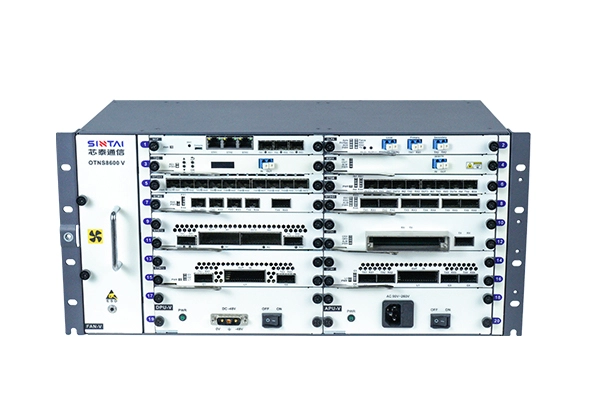
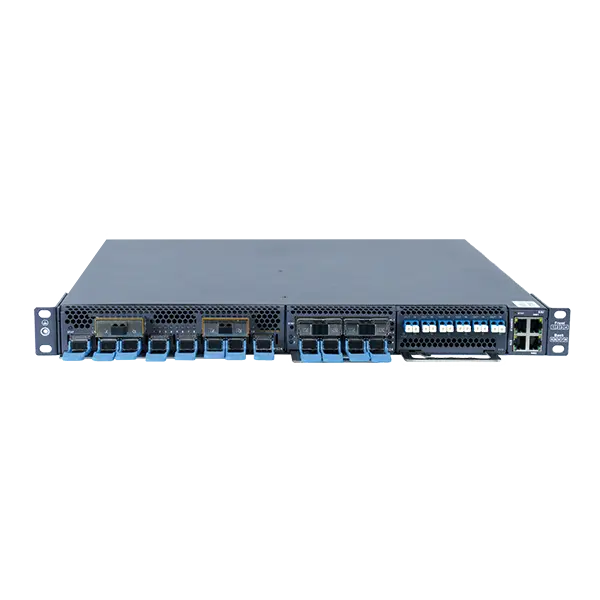
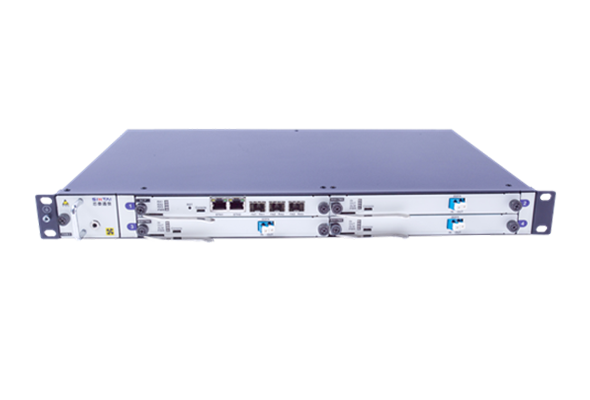
For network operators and system integrators reviewing suitable equipment, Sintai's optical amplifier products can be considered according to the requirements of the intended optical architecture. Looking at amplifier specifications together with the actual fiber link provides a more useful basis for equipment selection than comparing maximum pump power alone.
Where the required gain profile or pump configuration depends on specific fiber and transmission conditions, contacting Sintai's technical team for application-specific consultation can help clarify the appropriate configuration. Providing information about the signal wavelength range, fiber length, transmission distance, and target gain gives the supplier a practical basis for discussing the solution.
The gain of a Raman amplifier is the result of several interacting optical parameters. Pump power determines how much energy is available for Raman interaction, while pump wavelength determines where that gain is positioned relative to the signal spectrum. Fiber length controls the available interaction distance, but fiber attenuation determines how much optical power remains along that path.
The Raman amplifier working principle also explains why fiber characteristics such as effective area and Raman gain coefficient cannot be ignored. These properties influence how efficiently pump energy is transferred to the signal. Pump direction then changes the spatial distribution of that interaction, making forward, backward, and bidirectional configurations suitable for different system requirements.
For this reason, selecting a Raman optical amplifier should not be based on pump power or nominal gain in isolation. A more reliable approach is to evaluate pump wavelength, pump power, fiber length, attenuation, fiber characteristics, and pumping configuration as parts of the same optical design. When these parameters are properly balanced, Raman amplification can provide a controlled and effective way to enhance signal performance across demanding optical transmission links.
The Raman amplifier working principle is based on stimulated Raman scattering. Optical energy from a pump is transferred to a signal at a longer wavelength as the pump and signal interact within the optical fiber.
Higher pump power can increase Raman gain under suitable conditions, but the resulting improvement also depends on pump wavelength, fiber attenuation, fiber characteristics, pump configuration, and the target signal band.
Pump wavelength determines the spectral relationship between the pump and signal and therefore affects where Raman gain occurs. It must be selected according to the signal wavelengths that require amplification.
Fiber length determines how long the pump and signal can interact. Increasing length can provide additional Raman interaction, but it also introduces additional fiber attenuation, so the optimum length depends on the complete link design.
Forward pumping sends the pump in the same direction as the signal, while backward pumping sends it in the opposite direction. The two configurations produce different pump and gain distributions along the fiber.
Selection should consider the target signal wavelengths, required gain, pump power, pump wavelength, fiber length, fiber attenuation, effective area, Raman gain characteristics, pumping configuration, and the overall optical network architecture.



 English
 русский
 Indonesia
 Español
 português
 العربية
 français
 Deutsch
 हिंदी
 tiếng việt